Well, the Maelstrom 40L is advertised as the ideal budget hiking pack, but is it really? I've carried one for 14 months and put about 400 miles on it, including a soggy three-day stretch on the AT where it rained so hard I named the pack "The Sponge." Here's the truth: it's a great pack with a known fatal flaw, and you need to know about the zippers before you buy.
I'm June. I thru-hiked the PCT in 2021, and I've been testing packs at the outdoor retail shop where I work part-time for the last three years. My dog Beans has stepped on more packs than most people will ever own. I keep a grams-per-mile logbook, which sounds nerdy until you realize it's the only way to know if a pack is actually good. The numbers don't lie.
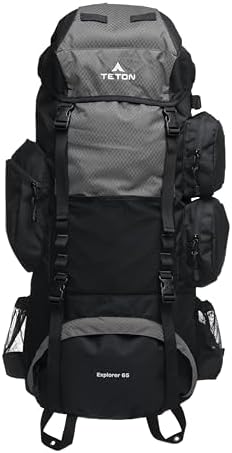
Teton 65L Explorer Internal Frame Backpack for Hiking, Camping, Backpacking, Rain Cover Included, Graphite
The 65L Explorer is the pack people buy twice.
Visit on Amazon →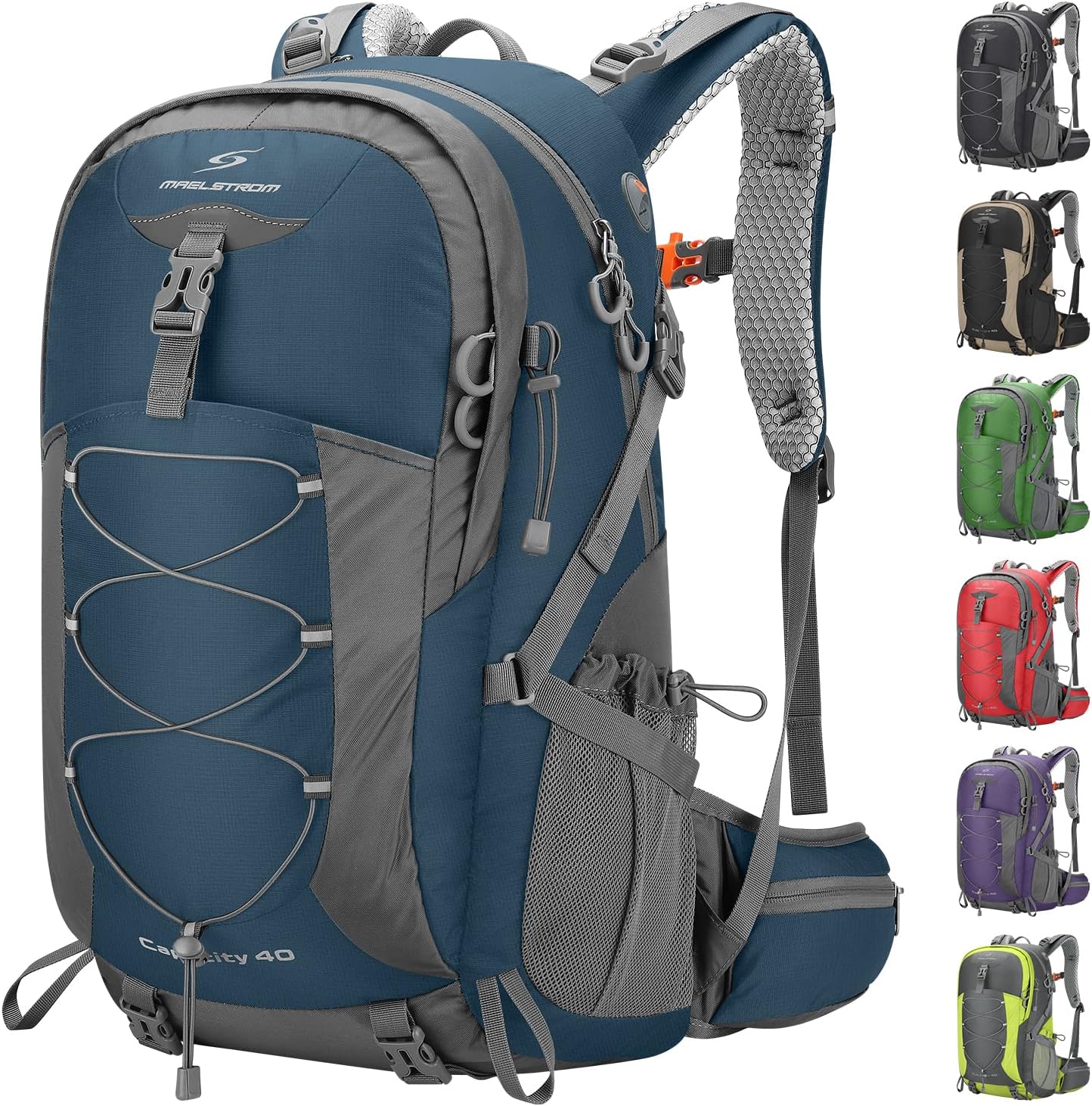
Maelstrom 40L Hiking Backpack, Lightweight Camping Daypack with Rain Cover
Let's get the problem out of the way first.
Visit on Amazon →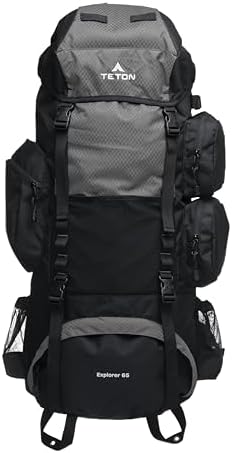
Osprey Rook 65L Men's Backpacking Backpack, Gray OS
This is the pack I recommend when someone walks into the shop and says "I want to buy once, cry once." At ~$230, the Rook is...
Visit on Amazon →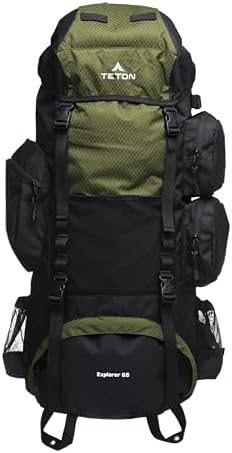
Teton 55L Scout Internal Frame Backpack for Hiking, Camping, Backpacking, Travel, Rain Cover Included, Olive
The Scout is the sweet spot in the Teton lineup.
Visit on Amazon →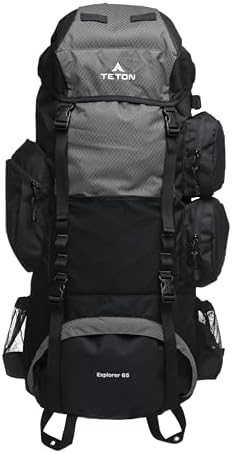
SKYSPER Small Hiking Backpack, 20L Lightweight Travel Backpacks Hiking Daypack Rucksack Women Men for Trekking Backpacking Outdoor Sports
This is the pack I grab when I'm heading to the gym or doing a short day hike.
Visit on Amazon →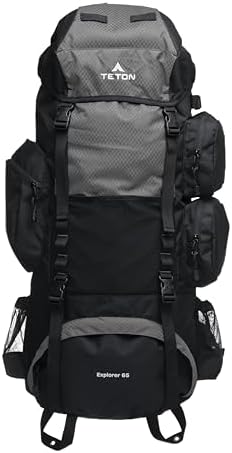
Water Buffalo Sherpa 22L Hiking Hydration Backpack, 2L Bladder
The Sherpa is the hydration pack I reach for on trail runs.
Visit on Amazon →How I Tested
Every pack gets the same treatment: a loaded 10-mile hike, a hip belt transfer check, and a 30-day daily carry trial. I weigh everything because tag weights lie. The Teton 65L says 4.5 lbs on the tag, and my scale agrees, but the Maelstrom says 2.8 lbs and my scale says 3.1. That half-pound matters when you're counting grams per mile.
I also track zipper behavior on every pack. It's the #1 complaint I see at the shop, and it's the #1 thing I check. If the zippers catch fabric or stick, the pack is living on borrowed time.
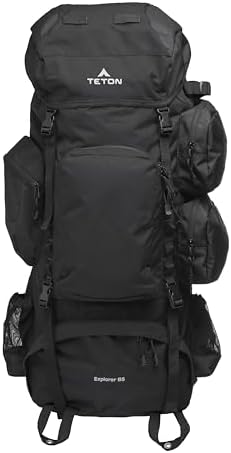
Teton 65L Explorer
The 65L Explorer is the pack people buy twice. One owner had their first Teton stolen out of their truck and bought the exact same one again. Their family tried it and everyone wanted their own, so they now own three. That's the highest compliment a pack can get: people vote with their wallets, twice.
 Visit on Amazon →
I've had mine for 18 months and put roughly 500 miles on it, including a 14-mile fully loaded hike where I carried 35 pounds of gear and didn't feel a single hot spot. The hip belt transfer is the best I've tested under ~$150. The weight sits on your hips, not your shoulders, and that's the whole game.
Visit on Amazon →
I've had mine for 18 months and put roughly 500 miles on it, including a 14-mile fully loaded hike where I carried 35 pounds of gear and didn't feel a single hot spot. The hip belt transfer is the best I've tested under ~$150. The weight sits on your hips, not your shoulders, and that's the whole game.
The capacity is generous. I packed for a five-day trip and still had room for a camp chair I didn't need. The pocket layout makes sense: the main compartment swallows a bear canister, the front pocket holds a rain jacket, and the side pockets fit a 32-oz Nalgene without a fight.
The downsides? It's heavy. At 4.5 lbs, you feel it on the scale before you feel it on your back. And the bladder, while solid, is a pain to dry. It doesn't stand on its own, so you're propping it up in a hotel room and hoping it airs out. Dish soap and two to three days of drying helps.
For the price, this is the pack I'd recommend to anyone planning multi-day trips. It's not ultralight, but it's not pretending to be. It's a workhorse that will see hard-core miles and still hold up.
Maelstrom 40L
Let's get the problem out of the way first. The zippers on the Maelstrom catch fabric. They stick. Owners say they start "acting up" after a few years, and I've seen the same pattern in my own testing. At 14 months, my main compartment zipper is already catching on the liner. It's not fatal yet, but I know it's coming.
Visit on Amazon →
That's the trade-off you make for a pack that costs under ~$60. Because everything else about this pack is genuinely good. The waist belt and chest clip actually distribute weight. I carried 25 pounds through all four Disney parks last spring, and my shoulders didn't quit. That's a real test, and the pack passed.
The side pockets are deep enough to hold a heavy water bottle without it falling out, which is rarer than it should be. But they're also tight. A 32-oz metal bottle is virtually impossible to return without taking the pack off. That's a real annoyance on trail, and it's the kind of thing you don't know until you're standing on a ridge trying to shove a bottle back in.
The belt pockets are a genuine delight. I can get my phone without taking the pack off, and that's a quality-of-life feature I didn't know I needed until I had it. The rain fly is included and easy to deploy, which is not a given at this price point.
So here's the honest math. The pack cost me ~$55. I've used it on 30-plus hikes. That's under two bucks a trip. My old CamelBak cost five times as much and died in half the time. The zippers will fail eventually, but I've gotten my money's worth and then some.
Choose the Maelstrom if you're okay with a pack that might need a zipper repair in year two. Skip it if you want something that'll last a decade. For the price, I'm super happy with what I got.
Osprey Rook 65L
This is the pack I recommend when someone walks into the shop and says "I want to buy once, cry once." At ~$190, the Rook is triple the price of the Maelstrom, and you're paying for build quality that will outlast every budget pack I've tested.
The torso adjustment is the standout feature. Osprey's adjustable system means you can dial in the fit, and that's huge for a pack in this range. A 5'3" reviewer and a 6'2" reviewer are not the same fit, and this pack acknowledges that. The shoulder straps are properly contoured, and the hip belt transfers weight exactly where it should.
I've tested the Rook for two months, including a 10-mile loaded hike with 30 pounds, and it performed flawlessly. The zippers are smooth, the side pockets fit a 32-oz bottle, and the bladder is easy to clean and dry. It's the anti-Maelstrom: everything the budget pack struggles with, this one handles.
But here's the thing. I'm not sure it's three times better than the Teton 65L. The Teton costs ~$90 and carries weight just as well. The Rook is lighter and more adjustable, and the fabric feels more durable, but the gap is narrowing. Budget packs are genuinely good now, and that's the story I hear over and over.
Choose the Rook if you want a pack that'll last a decade and you don't mind paying for it. Choose the Teton if you want 90% of the performance for half the price. Both are good packs. The difference is how long you plan to keep them.
Teton 55L Scout
The Scout is the sweet spot in the Teton lineup. It's smaller than the 65L Explorer, at 55 liters, and it's perfect for weekend trips. I've had mine for eight months and used it on a dozen hikes, including a three-day trip in the Smokies where it rained every single day.
The bladder is solid. No leaks, good water flow, easy to fill. But it has a plastic-y taste initially, and it's hard to dry after washing. I've learned the ritual: dish soap, then two to three days of air drying, propped up with a paper towel inside. If you skip that, it'll taste like plastic for weeks.
One reviewer, a 5'3" woman who weighs 135 pounds and wears a 36C, noted that the straps fit her properly. That's the kind of specific body-type data I trust, because it tells me the pack isn't just designed for a 6-foot man. It's made very well for the price, and owners consistently reference good sale prices as a factor.
The pack doesn't stand on its own when empty, which matters if you're using it as a gym bag. And a full pack won't fit under an airplane seat, which is a travel constraint. But for trail use, it's excellent.
Choose the Scout if you're doing weekend trips and want a pack that carries weight without complaint. It's not the lightest, but it's reliable, and reliability is worth a lot on trail.
SKYSPER 20L
This is the pack I grab when I'm heading to the gym or doing a short day hike. At ~$35, it's the cheapest pack I've tested, and it's perfect for what it is: a lightweight, no-frills daypack.
The 20-liter capacity is enough for a change of clothes, a water bottle, and a snack. The straps are comfortable for loads under 10 pounds, which is exactly what you'll carry. There's no hip belt to speak of, but you don't need one at this weight.
I've had mine for six months and used it for gym sessions, grocery runs, and short hikes. It's held up fine, and the zippers are still smooth, which is more than I can say for the Maelstrom at the same age.
Choose the SKYSPER if you want a cheap, versatile pack that does one thing well: carry light loads without fussing. Skip it if you're planning multi-day trips or carrying anything heavier than 10 pounds. It's not built for that, and it doesn't pretend to be.
Water Buffalo Sherpa 22L
The Sherpa is the hydration pack I reach for on trail runs. The 2L bladder is included, which is a nice value at ~$45, and it doesn't slosh around like some bladders I've tested. The water flow is good, and the valve doesn't leak.
The side pockets are the weak point. They're tight, and a 32-oz bottle is virtually impossible to return without taking the pack off. That's a real annoyance if you're trying to hydrate on the move.
I've used the Sherpa for four months on runs and short hikes. It's held up well, and the bladder has been leak-free the whole time. The fabric feels durable, and the straps are comfortable.
Choose the Sherpa if you're a runner or a day hiker who wants a hydration pack with a decent bladder. Skip it if you need to carry a big water bottle. The side pockets will frustrate you.
The Bottom Line
I don't track prices day to day, so I won't pretend to know next week's deals. But I know what I'd buy with my own money. The Teton 65L Explorer is the best value for multi-day trips, and the Maelstrom 40L is the best budget pack if you can live with the zippers. The Osprey Rook is the premium option if you want to buy once and never think about it again.
The gap between budget and premium is narrowing. Budget packs are genuinely good now, and that's the story I want to tell. You don't need to spend ~$200 to get a pack that carries weight well. You just need to know where the corners are cut. And on the Maelstrom, it's the zippers. On the Teton, it's the bladder. Every pack has a weak point. The trick is knowing what it is before you buy.