Buying a hiking backpack is mostly a math problem about load and fit, and most shoppers solve it backwards. They start with a volume number or a color, then find out at mile eight that the weight is hanging off their shoulders instead of sitting on their hips. Capacity tells you what a pack can hold. It says nothing about whether you can carry it comfortably. That is why the six products in this guide are sorted by what they are actually built to do, not by a single spec. You will find a 65-liter backpacking pack for multi-day trips, its men's-specific counterpart, a 12-liter hydration pack for fast trail runs, two military-style rucksacks for rugged utility and bug-out use, and a hydration bladder that turns a reservoir-compatible hiking backpack into a water carrier.
Related: How to Measure Torso Length Before You Buy a Backpack
Quick answer
The Osprey Renn 65L Women's Backpacking Backpack is the strongest fit for multi-day backpacking trips because it pairs a 65-liter capacity with a women's-specific design, and a women's-specific build is one of the few specs that reliably changes where a loaded pack sits on your body. Choose the Osprey Rook 65L Men's Backpacking Backpack instead when you want the same 65-liter capacity in a men's-specific design.
Hiking backpack features worth comparing
Capacity and intended load. A 65-liter pack is built for multi-day trips with a shelter, a sleep system, food, and water. A 12-liter pack is built for a few hours of fast movement with water and a shell. A 40 to 50-liter military-style rucksack sits between those poles and leans toward durability and attachment points rather than ultralight carry. Match volume to the longest trip you realistically take, then subtract a little. Most people overbuy volume and then fill it.
Hip belt and load transfer. The hip belt is where the weight should live. A pack that only touches your shoulders at mile one will have you miserable by mile eight. When you compare packs, look at how substantial the hip belt is, how far it wraps around the iliac crest, and whether it can be tightened without riding up onto your waist.
Torso fit and sizing approach. Torso length, measured from the C7 vertebra at the base of your neck to the top of your hip bones, decides whether a pack's frame lines up with your skeleton. A pack listed in a single one-size fit still has a torso range it works within. Know your number before you shop.
Hydration compatibility. A reservoir sleeve and a hose port make a difference on long days. If a pack does not ship with a bladder, a separate hydration bladder in the right size solves it. Confirm the sleeve dimensions and the hose routing on the current listing rather than assuming.
Construction, closures, and attachment systems. Panel-loading packs with zippers are convenient for travel and daily carry. Top-loading packs with a lid are common for backpacking. MOLLE webbing on military-style packs lets you attach pouches, but every attachment adds weight.
Osprey Renn 65L Women's Backpacking Backpack, Blue OS
A 65-liter women's-specific backpacking pack from Osprey, offered in Blue in a one-size fit. Aimed at multi-day trips where a full load needs to ride on the hips.
Visit on Amazon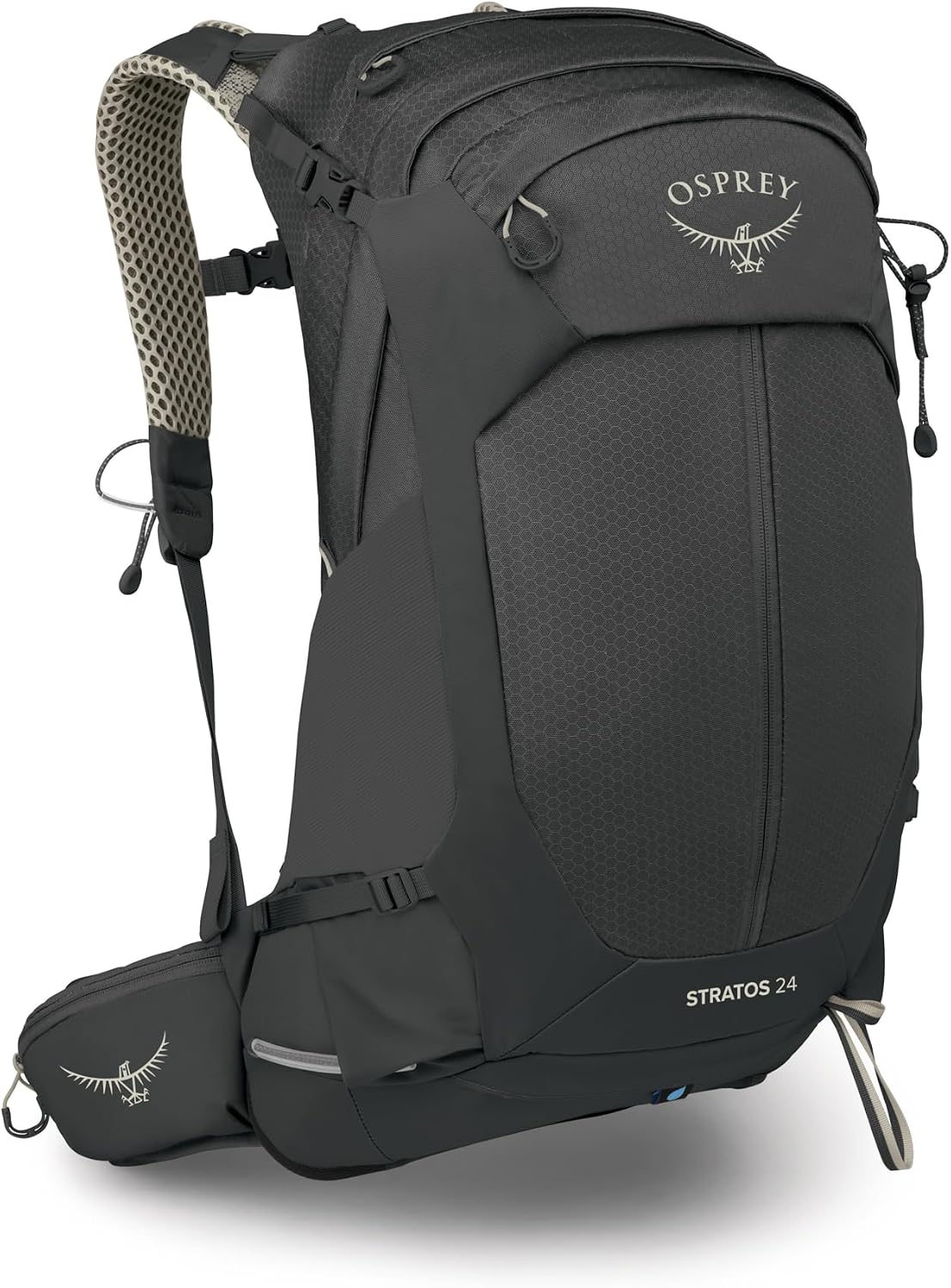
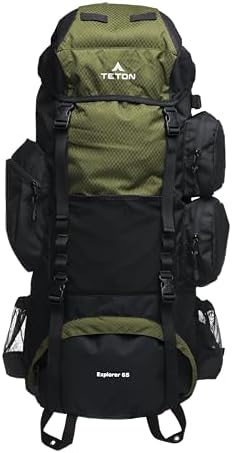
Osprey Rook 65L Men's Backpacking Backpack, Brown OS
The men's-specific counterpart to the Renn, with the same 65-liter capacity in Brown and a one-size fit for multi-day backpacking loads.
Visit on Amazon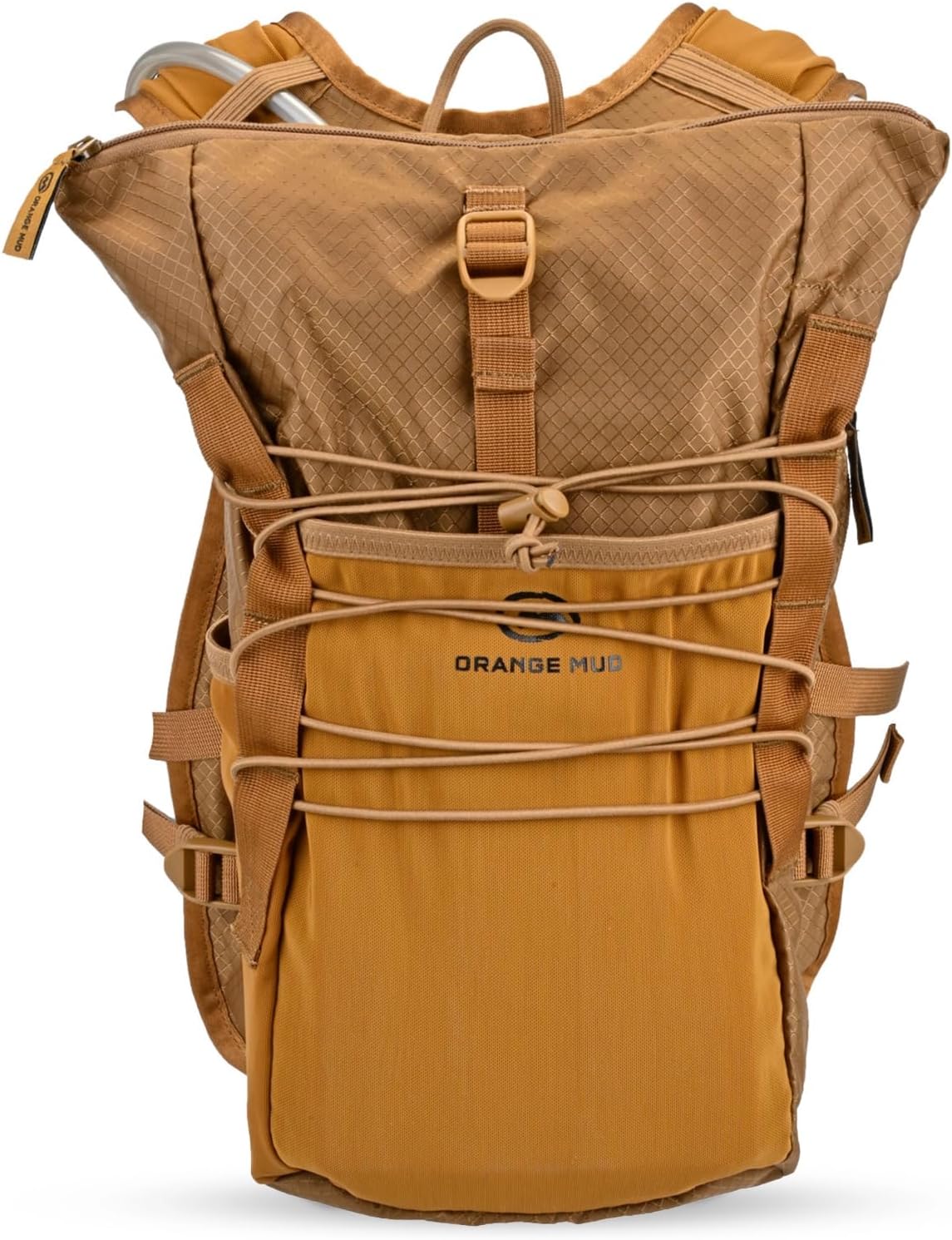
Orange Mud Adventure Pack 12L 3.0 Hydration Backpack Trail Running
A 12-liter hydration pack aimed at trail running, built for fast, light days when a full backpacking pack is more volume than the trip needs.
Visit on Amazon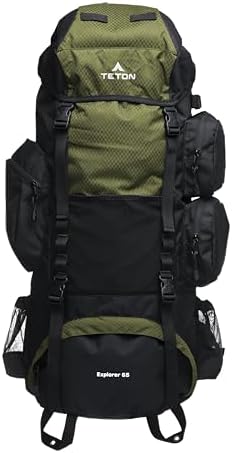
Large Military Tactical Backpack for Men, 40-50L Backpacks for Women, Bug out Bag Army 3 Days Pack Bags Rucksack with Molle System Green
A 40 to 50-liter military-style rucksack in green with a MOLLE system for attaching pouches. Positioned for bug-out and rugged utility use rather than ultralight backpacking.
Visit on Amazon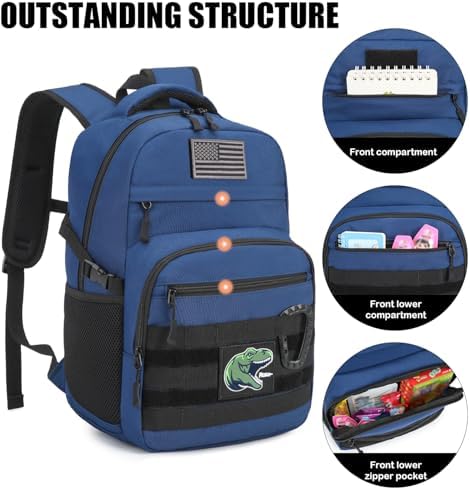
Kids Tactical Backpack Army Molle Bookbag Military Boys Backpack
A smaller military-style bookbag with MOLLE webbing, sized and styled for kids rather than for adult backpacking loads.
Visit on Amazon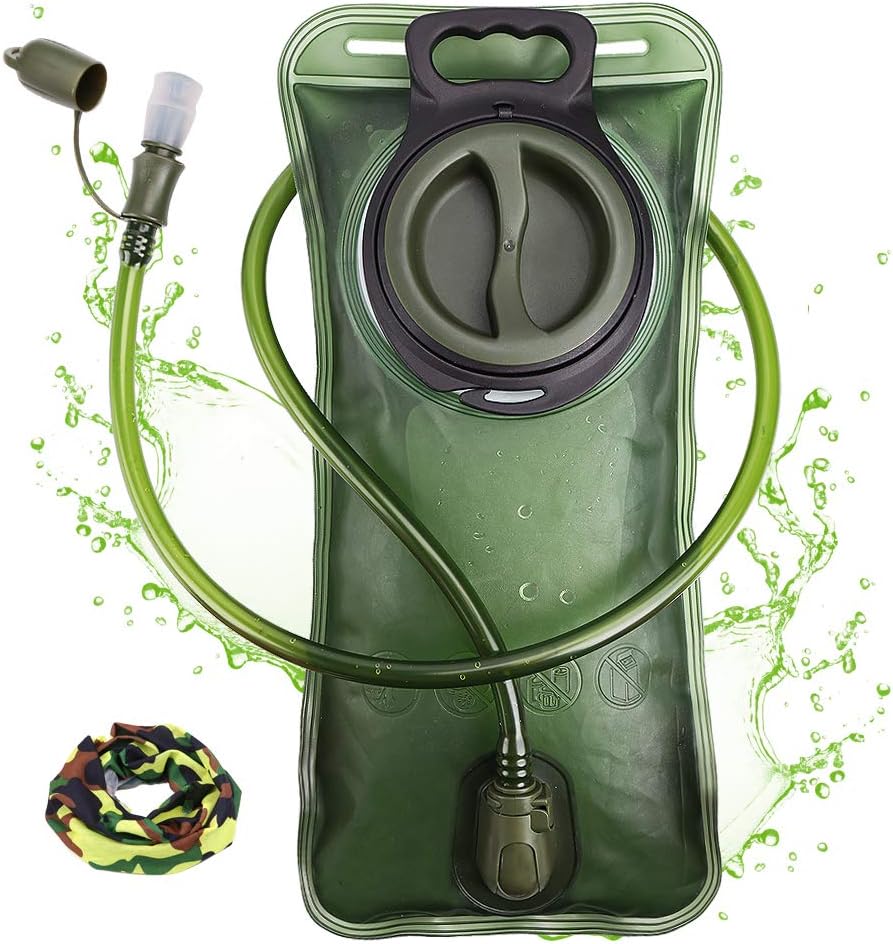
Hydration Bladder, 1.5-2-3L Water Bladder for Hiking Backpack, BPA-Free Leak Proof Water Reservoir Storage Bag, Water Pouch Hydration Pack for Camping Cycling Running
A BPA-free hydration bladder offered in 1.5, 2, and 3-liter sizes, designed to drop into a hiking backpack's reservoir sleeve for hands-free drinking.
Visit on AmazonPrices and availability may change. Check the retailer for current details.
How these products were compared
This guide compares intended capacity and use case, fit and sizing approach, carry and hydration compatibility, construction and attachment systems, and value relative to the job each pack is built to do. Product names, images, and retailer links are matched to the exact listing so that every card points to the product shown.
The descriptions here come from manufacturer and retailer product information for each model. They are not the result of a controlled field test, and no pack in this guide was carried on a measured route for this article. Where a claim depends on how a specific pack fits a specific body, that depends on your torso length and the load you carry, and it is something you have to confirm yourself. Do not treat the criteria above as hands-on testing results. Use the CTA on each card to confirm current price and availability, since both change.
How to choose the right hiking backpack
Start with torso length, not capacity. Torso length is the measurement from the C7 vertebra at the base of your neck down to the top of your iliac crest, the bony shelf at the top of your hips. It is the spec almost everyone skips and the one that decides whether a pack's frame lines up with your skeleton. If a pack is listed in a single one-size fit, that does not mean it fits everyone. It means the manufacturer designed an adjustable or broad range. Measure yourself first, then check whether your number falls inside the range the listing describes.
Then decide volume by trip length, not by ambition. A 65-liter pack such as the Osprey Renn or Rook is sized for multi-day backpacking with a full sleep system and several days of food. If your trips are overnighters or day hikes, that volume is more than you need, and empty space in a big pack carries badly because the load shifts. A 40 to 50-liter rucksack covers multi-day utility and travel-style use with a heavier, more abrasion-resistant build. A 12-liter hydration pack covers a few hours of running or fast hiking. Buy for the trips you take most often, not the one trip you are dreaming about.
Look hard at the hip belt. The hip belt does most of the work in a loaded pack, which means its shape and stiffness matter more than the number of pockets. A belt that rides up onto your waist instead of wrapping your iliac crest will not transfer load, no matter how much padding it has. When a pack arrives, load it, put it on, tighten the hip belt first, then the shoulder straps, and see whether the weight lands on your hips. If it does not, the pack is the wrong size or the wrong shape for you, and no adjustment will fix that.
Match hydration to how you drink. If you sip constantly, a reservoir sleeve plus a hydration bladder in the 1.5 to 3-liter range is more practical than stopping to pull out a bottle. If you drink in bursts, bottles are simpler to refill and clean. Confirm the sleeve dimensions and hose port on the exact listing before you buy a bladder separately. For a closer look at fit and sizing, see our guide to measuring torso length.
Finally, think about who is carrying the pack. A kids' tactical bookbag is built for a child's frame and a school load, not for a 30-pound backpacking load. Buying an adult pack for a kid, or a kids' pack for an adult, usually ends with a pack that does not carry well for either person.
Osprey Renn 65L Women's Backpacking Backpack
The Renn 65L is Osprey's women's-specific backpacking pack in the 65-liter class, offered here in Blue in a one-size fit. Osprey has a long-standing reputation for durable backpacking packs and a strong warranty program, and the Renn line is designed around a women's-specific fit rather than a shrink-and-pink version of a men's pack. That matters most at the hip belt and shoulder straps, where a women's-specific cut is meant to sit on a different set of contact points.
The trade-off is straightforward. A 65-liter pack is the wrong choice if your trips are day hikes or overnights, because you will carry empty volume and a heavier pack than the trip requires. A one-size listing also means fit depends entirely on your torso length falling inside the range the pack is built for, so measure before you buy. And if you plan to drink from a reservoir, confirm the hydration sleeve and hose routing on the current listing and plan on buying a bladder separately if one is not included.
Alternatives to consider
The Osprey Rook 65L Men's Backpacking Backpack is better suited to the same multi-day backpacking trips when you want a men's-specific fit, while the Orange Mud Adventure Pack 12L 3.0 Hydration Backpack Trail Running is a stronger fit when your days are short, fast, and light and a 65-liter pack would be dead weight.
The Large Military Tactical Backpack for Men, 40-50L Backpacks for Women, Bug out Bag Army 3 Days Pack Bags Rucksack with Molle System Green, the Kids Tactical Backpack Army Molle Bookbag Military Boys Backpack, and the Hydration Bladder, 1.5-2-3L Water Bladder for Hiking Backpack, BPA-Free Leak Proof Water Reservoir Storage Bag, Water Pouch Hydration Pack for Camping Cycling Running cover different jobs. The 40 to 50-liter rucksack is a rugged utility and bug-out option with MOLLE attachment points. The kids' tactical bookbag is a smaller, styled pack for children and school use. The hydration bladder is an accessory rather than a pack, sized in 1.5, 2, or 3 liters to fit a reservoir sleeve in a compatible hiking backpack.
Day-to-day use and maintenance
Empty and dry every pack after a trip. Dirt and grit in zippers and buckles shorten their life, and a pack stored damp will smell. Spot clean with a mild soap and a soft brush, then air dry it out of direct sun, which degrades coated fabrics over time. Do not put a framed pack in a washing machine. Store packs loosely, not compressed, and hang them rather than stacking heavy gear on top of them.
Hydration bladders need more attention than packs. Rinse the reservoir with warm water and mild soap after each use, work the cleaning solution through the hose if the bladder has one, and let both air dry fully before storage. Sugary drink mixes left in a bladder grow things you do not want in your water. If you use a bladder in freezing weather, blow water back out of the hose after drinking so it does not freeze solid.
Two safety notes. First, a pack that is loaded beyond what its suspension can carry will put weight on your shoulders and pull you off balance on uneven ground, so stay inside a realistic load for the pack. Second, carry water you trust. A clean bladder and hose matter as much as a clean bottle, and untreated backcountry water is a separate problem from the container you put it in.
Buying checklist
- Measure your torso length before you look at capacity.
- Choose volume based on your normal trips rather than an occasional edge case.
- Confirm that the exact model and size you are buying matches your torso range.
- Check whether the pack includes a hydration bladder or needs one bought separately.
- Read the cleaning and maintenance instructions for the pack and any bladder.
- Verify the current retailer price, availability, and return terms before ordering.
Final recommendation
Choose the Osprey Renn 65L Women's Backpacking Backpack when you want a women's-specific 65-liter pack for multi-day backpacking and your torso length falls inside its one-size range. Choose the Osprey Rook 65L Men's Backpacking Backpack when the same capacity in a men's-specific fit is the better match. Choose the Orange Mud Adventure Pack 12L 3.0 Hydration Backpack Trail Running for fast, light days, the 40 to 50-liter military-style rucksack for rugged utility and bug-out use, the kids' tactical bookbag for a child's school load, and the hydration bladder to add reservoir capacity to a compatible hiking backpack. The real decision is not which pack has the best feature list. It is which pack puts the load on your hips at mile eight, and that starts with your torso measurement.