Related: Best Hiking Backpacks for Women: Hip Belt Fit That Actually Works
Torso length is the spec everyone ignores and the one that matters most. Before brand, before color, before whatever suspension system the marketing copy is shouting about this season, the hiking backpack fit question comes first, and it comes down to one measurement: from the bony bump at the base of your neck, C7, down to the top of your hip bones.
I have carried a backpack roughly 8,000 miles in the last five years. I thru-hiked the PCT in 2021, section-hiked the AT, and I work part time in outdoor retail mostly for the gear discount and the honest questions people ask at the fitting bench. Those questions are almost never about features. They are about why the pack that felt perfect in the store turned into a shoulder-aching mess by mile six.
This guide covers four packs doing four different jobs: a hydration pack built around a bladder, a 50 liter tactical hauler, a women's-specific day pack, and a simple cinch-top daypack. I will tell you what each one is actually for, what the spec sheet leaves out, and how to check fit before you spend anything. Prices move, so check current Amazon price on the live listing rather than trusting a number you read last month.
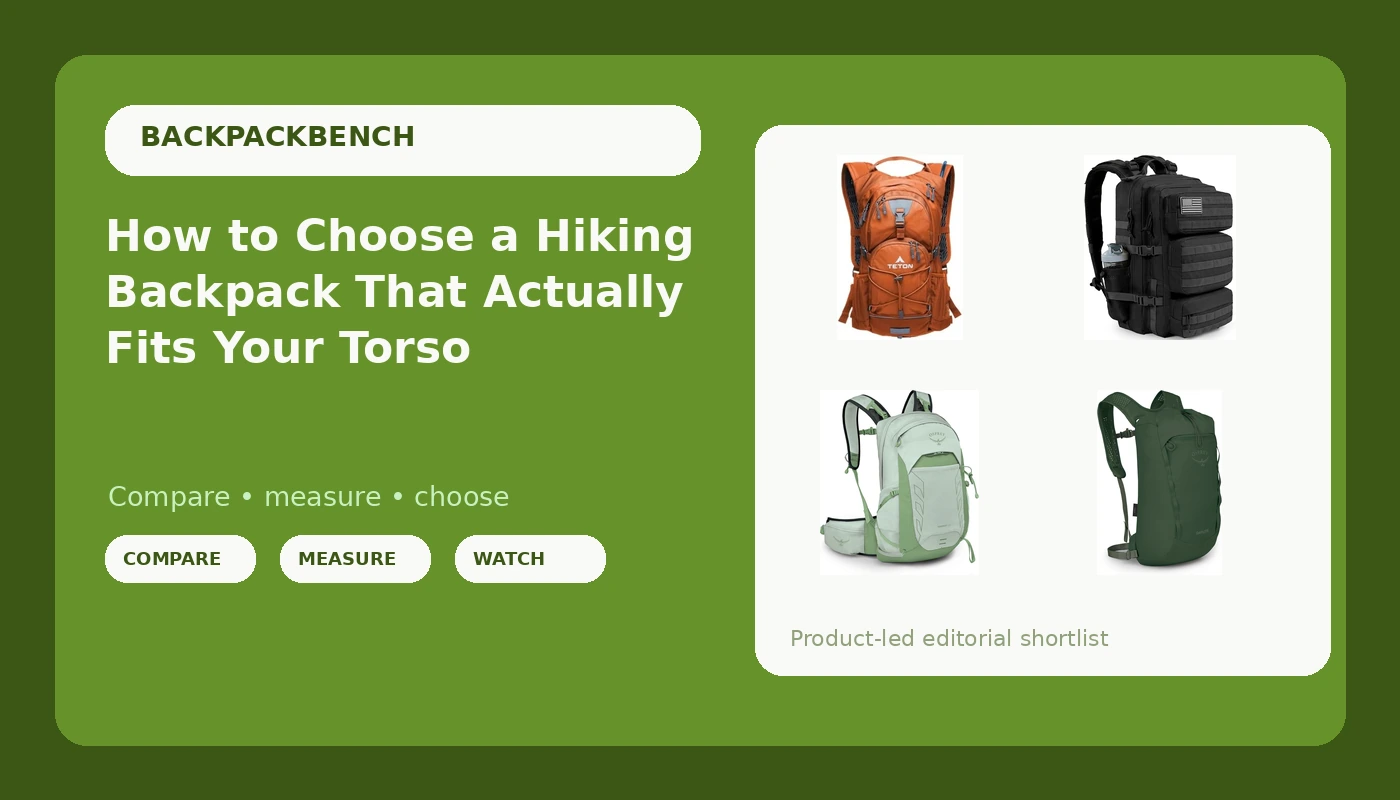
Best for drinking on the move: Teton Oasis/Trailrunner Hydration Backpack
This is the pack for the day you are moving fast and stopping is annoying. It comes in 18 liter and 22 liter versions with a 2 liter or 3 liter bladder, and it is built for running, cycling, and quick hikes where the water is the point. A full 3 liter bladder is over six pounds of water, which is the real weight of this pack, not whatever the tag says. Plan the rest of your load around that.
The sewn-in rain cover is the detail I like most. Separate covers get left in the car, and a cover sized for an empty pack fights you when the pack is stuffed. A sewn-in cover never goes missing, though it will not stretch over a load strapped to the outside. Check that the hose exits on the shoulder you want and that the bite valve sits near your mouth without a hand holding it. If you have to fish for the valve while pedaling, the routing is wrong for you.
It fits men and women because it is a unisex pattern, which means the hip belt is a stabilizer, not a load carrier. Keep it under about 15 pounds and it does its job.
Best for cheap volume: 50L Military Tactical Backpack
Fifty liters for a fraction of what a name-brand 50 liter costs. That is the entire pitch, and for car camping, gear hauling, travel, and a bug out bag in the closet, it is a good one. The fabric is water resistant and the build is heavy duty, and the MOLLE webbing gives you attachment points for everything from a sleeping pad to a hatchet.
Two things decide whether this pack works for you. First, the hip belt. At 50 liters you will be carrying real weight, and the hip belt does 80 percent of the work. If it is thin, if it rides up onto your waist instead of sitting on your hip bones, the load goes to your shoulders and stays there. Second, water resistant is not waterproof. Use a pack liner or a dry bag for anything that has to stay dry, especially on a multi-day trip.
The weight penalty is the trade you are making. Heavy duty fabric and webbing are not light, and this pack will never win a grams-per-mile argument. It is not trying to. It is trying to move a lot of gear for very little money.
Best for women's day hikes: Osprey Tempest 22L
Osprey is the best all-round brand in my book. The suspension genuinely transfers load to the hips, and the warranty is legendary, which matters when you are spending real money on a pack you plan to keep for a decade. The Tempest is the women's line, and this is the 22 liter version in green.
Women's-specific is not marketing. It usually means a shorter torso range, narrower shoulder straps, and a hip belt shaped to sit on the hips rather than wrap a straighter waist. That last part is the one that changes your mile eight. A hip belt that rides up is my single biggest pet peeve in this category, and it is almost always a shape problem, not a tightening problem.
Twenty-two liters is a day hike and a fast overnight if you are disciplined. It is light, it is simple, and it is the pack I would hand a friend who is tired of shoulder aches. Just measure your torso first. A pack that does not fit is worse than a cheaper pack that does, no matter what the logo says.
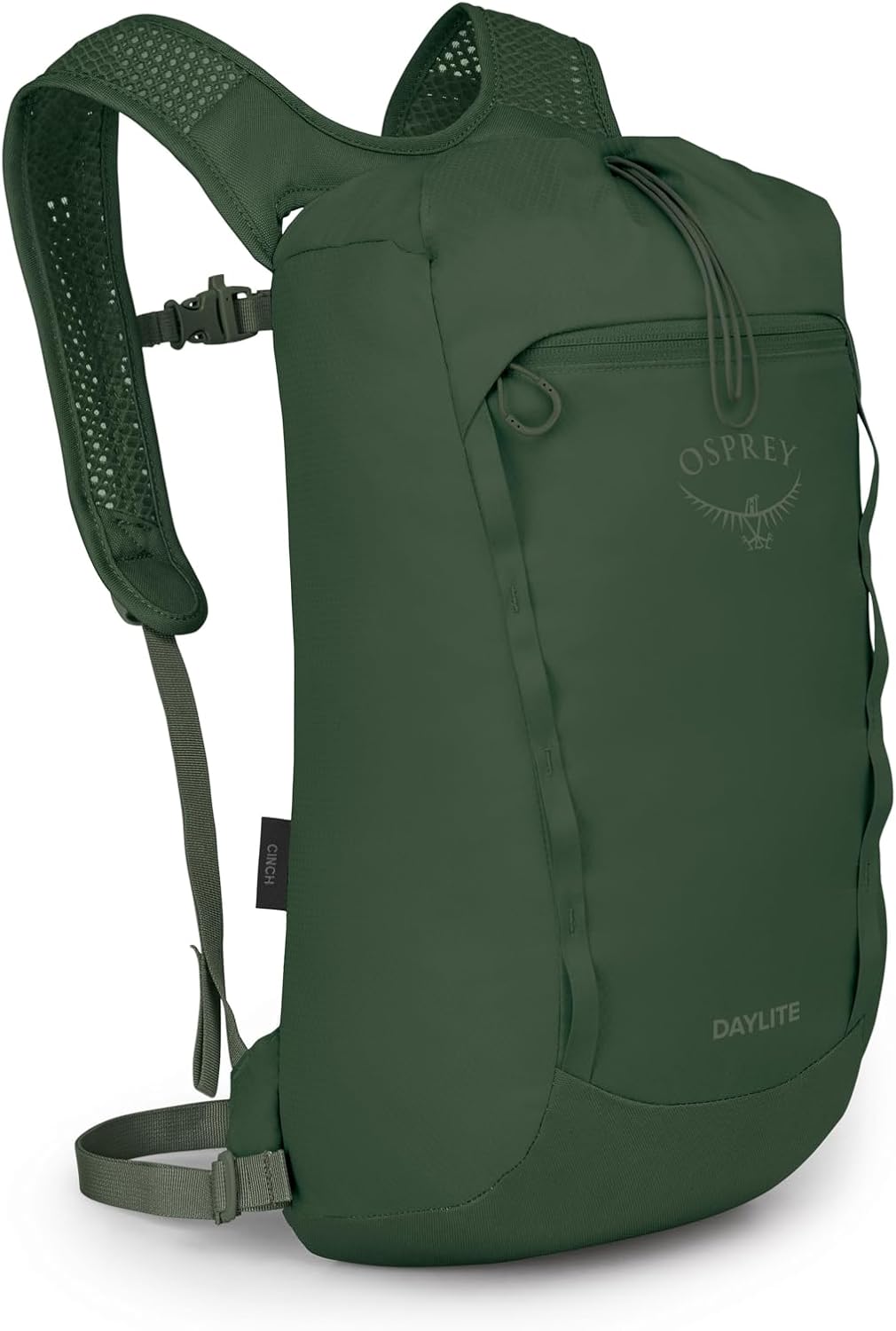
Best for simple day carry: Osprey Daylite Cinch
A cinch top is the most underrated closure in backpacking. There is no zipper to fail, it compresses a half-full load instead of letting it slosh around, and you can open and close it with one hand. The Daylite Cinch is that idea in its simplest form: a light daypack you grab without thinking.
The trade-off is access. A cinch top means digging from the top down, so the thing you need most should go in last. This is a five to eight mile day hike pack, a summit pack off a basecamp, a commuter. Keep it light. A pack this simple is built for light loads, and once you push past about 15 pounds you want a frame and a real hip belt doing the work, which is a different pack entirely.
If you already own a big hauler and you want one small pack that always works, this is a reasonable second purchase.
How I evaluate a pack
Every pack I recommend goes through the same checklist. I measure torso length from C7 to the iliac crest, because that number decides the size, and everything else is adjustment. Then a loaded 10 mile hike. Then the hip belt transfer check: on a climb, loosen the shoulder straps and see whether the pack stays put on your hips. If it slides down your back, the belt is not carrying.
I also do a 30 day daily carry trial, because pockets reveal themselves slowly. Can you reach the side pockets while walking? Does the lid stay open when you need both hands? Does the rain cover still fit when the pack is full, which is the only time you need it?
And I weigh things myself. Tag weight and trail weight are different numbers, and the one that matters is how the pack feels at mile eight with your actual load in it.
Analysis: fit, volume, and load transfer
Fit beats features, every time. A $400 pack that does not match your torso is worse than a $100 pack that does. That is why the Tempest, a women's-specific pack, is the one I would point a woman toward before anything else on this list, and why the unisex hydration pack is a stabilizer harness rather than a load carrier.
Volume numbers lie in both directions. A 50 liter tactical pack and a 22 liter Osprey are not competing, but even within the same number, usable volume depends on shape. Deep, narrow packs swallow a sleeping bag. Wide, shallow packs eat your organization. A pack is only as good as its worst pocket, and a useless pocket is worse than no pocket, because you will fill it and then hate it.
Weight is not a number on the tag. It is how the pack feels at mile eight. The tactical pack is the heaviest empty and the cheapest per liter, and that is a fair trade for gear hauling. The Osprey packs are lighter because they are designed around lighter loads. Neither is wrong. They are answering different questions.
Torso length is the spec that decides everything. Buy for the torso, adjust straps second. If a listing does not give you a torso range, measure yourself and compare against the size chart before you order, and be ready to send it back.
The hiking backpack comparison table
Four packs, four jobs. Use this as a starting point, then go back and read the section for whichever one matches your trip. Volume and feature notes come from the listings. Prices change constantly, so check current Amazon price on the product page.
| Pack | Best for | Volume and closure | Price |
|---|---|---|---|
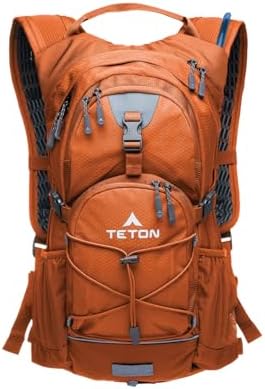 Visit on Amazon → Visit on Amazon →Teton Oasis/Trailrunner Hydration Backpack |
Running, cycling, and fast day hikes where water is the priority | 18L or 22L, 2L or 3L bladder included, sewn-in rain cover, unisex fit | $53.73 |
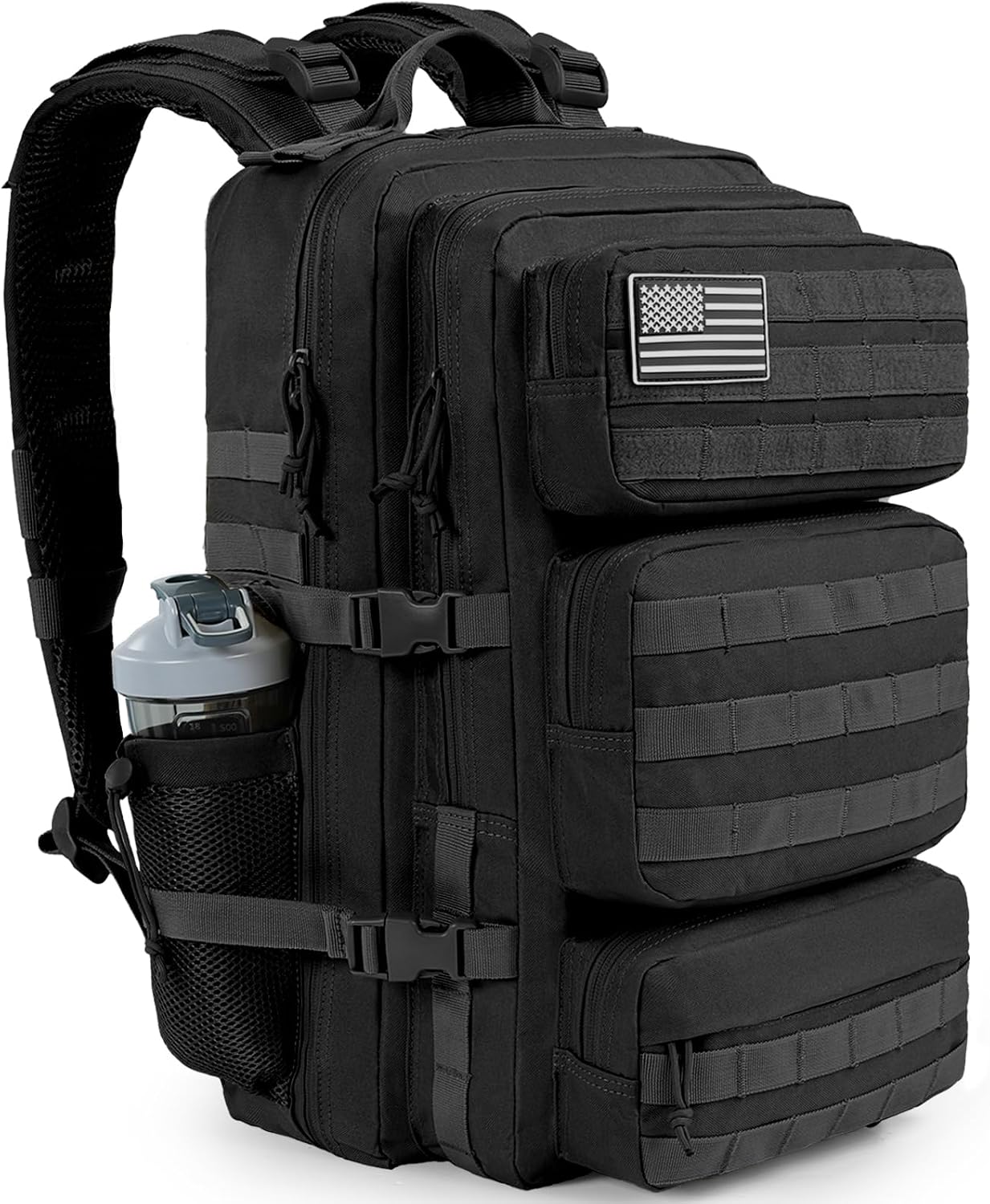 Visit on Amazon → Visit on Amazon →50L Military Tactical Backpack |
Car camping, gear hauling, bug out duty, cheap volume | 50L, water resistant fabric, MOLLE webbing, heavy duty build | $33.99 |
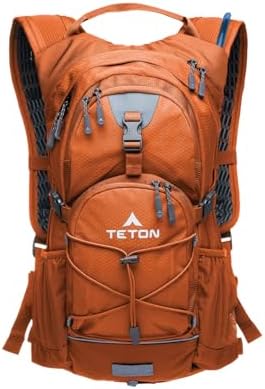 Visit on Amazon → Visit on Amazon →Osprey Tempest 22L Women's |
Women's-specific day hikes and fast overnights | 22L, lightweight, women's-specific harness and hip belt | $170.00 |
 Visit on Amazon → Visit on Amazon →Osprey Daylite Cinch |
Simple, light day carry and commuting | Cinch top closure, minimal design, light loads | $60.00 |
Read the table by column, not by row. If your trip is a fast 10K with a bladder, the answer is in the first row. If your trip is a weekend of car camping with a cooler and a canopy, the answer is in the second. The two Osprey packs are the same brand solving two different problems: one is a fitted day hike pack, one is a stuff-it-and-go bag.
Should you buy the Teton Oasis/Trailrunner hydration pack?
Yes, if you want to drink without stopping. The bladder is included, the rain cover is sewn in so it cannot be forgotten, and the sizing covers both a short run and a full day out. Just remember that a 3 liter bladder is over six pounds of water, so the rest of your kit has to stay lean. This is a hydration-first pack with storage attached, not a load hauler. Check current Amazon price and confirm the bladder size you are ordering, because 2 liter and 3 liter are very different days.
Should you buy the 50L Military Tactical Backpack?
Yes, for gear hauling where price matters more than weight. Fifty liters, water resistant fabric, and MOLLE webbing for a fraction of what the big brands charge. It is the pack I would buy for a truck kit, a bug out bag, or a first camping setup. Put everything inside a liner, try it loaded before you trust it on a long walk, and check that the hip belt actually sits on your hip bones. If it does, this is a lot of pack for the money. Check current Amazon price.
Should you buy the Osprey Tempest 22L?
Yes, if you are a woman who wants one day pack that fits properly. Osprey's suspension transfers load, the women's-specific cut addresses the hip belt shape problem, and the warranty means you are buying once. It is the most expensive pack here and the one I would least hesitate to recommend, because fit beats features and this is the pack built around fit. Measure your torso, order the right size, and check current Amazon price.
Should you buy the Osprey Daylite Cinch?
Yes, if your loads are light and your trips are short. The cinch top is fast, durable, and compresses a half-full pack better than any zipper. It is a great second pack, a great commuter, and a great summit bag. It is not the pack for a 30 pound load, and it is not trying to be. If you want one simple bag that works for a five mile trail and a grocery run, this is it. Check current Amazon price.