Related: Hip Belt Transfer: Why Your Pack Rides Up and How to Fix It
I measure torsos before I talk about anything else. Choosing a hiking backpack is a fitting problem long before it is a shopping problem, and most of the advice out there starts with the features list instead of the fit. I have carried a pack roughly 8,000 miles in the last five years, and the only thing that has ever changed my mind about a pack mid-trip was where the weight sat at mile 8, not how many pockets it had.
So this is not a list of the four packs with the most zippers. It is a fit-first look at four packs that cover four genuinely different jobs: a 55L internal frame pack for overnights and multi-day trips, a 30L packable daypack for travel and light days, a women's-specific 30L built around backcountry ski and snowboard days, and a hydration-first pack with a 2L or 3L bladder for running, cycling, and fast day hikes.
Start with your torso length. Liters, pockets, and color come after that. Get the torso right and a cheap pack feels better than an expensive one that is two inches too long.
Best Overall: Kelty Asher 55L Internal Frame
This is the pack I would hand a hiker who wants one bag for most of the year. The Kelty Asher is listed as a 55L internal frame pack in Winter Moss, and the internal frame is the part that actually matters. An internal frame puts the structure inside the pack body, against your back, so the load stays close to your center of gravity instead of swinging around behind you. That is the difference between a pack you forget about and a pack you fight all day.
The listing describes it as a daypack to multi-day backpacking capacity, which is the honest way to sell 55 liters. Compressed down, it is a daypack. Opened up, it takes a weekend kit, a bear can, or a food carry for a stretch between resupplies. That range is why I put it at the top of this list. Most people do not need one pack per trip type. They need one pack that stops being the reason they cancel.
Because it is also marketed as a lightweight travel pack, the suspension is built for reasonable loads, not for hauling a 50 pound expedition kit. That is not a flaw. It is a design decision, and it means you have to be honest about your base weight. A 55L bag with a light frame invites you to fill it, and a full 55L of gear weighs more than a light frame wants to carry. Weigh your kit before you buy the volume.
Two more things I would check in the store or at home before a trip. First, the torso adjustment: an internal frame only transfers load to your hips when the frame length matches your back. Second, the hip belt, because that is where 80 percent of the work happens. If the belt rides up onto your waist instead of sitting on the crest of your hips, no amount of packing skill will save the carry.
Best Value: WATERFLY 30L Packable Daypack
The WATERFLY is a 30L lightweight packable daypack in blue, and it is the pack that lives inside your luggage or at the bottom of your big pack until you need it. Packable packs like this one compress down small enough to disappear into a duffel, which makes it the right answer for a travel day, a town day, or a summit day where you left the big pack at camp.
The value argument is simple. For a light day load, a packable 30L does most of what an expensive daypack does, at a fraction of the cost and a fraction of the packed size. If your day kit is a shell, water, lunch, and a camera, this is plenty of pack.
Be clear about the tradeoff. There is no meaningful hip belt transfer here. The straps are there to keep the bag on your shoulders, and that is it. Load it to 15 pounds and you will feel every one of them by the end of the day. Keep it light and it disappears.
I would also treat weather honestly. A packable nylon daypack is not a waterproof pack. Use a liner, or put your insulation and your sleep system in a dry bag inside it. Do not count on the fabric alone in a Pacific Northwest afternoon, because it will not hold up to that. And when you are shopping, look at the side pockets. A pocket you cannot reach while walking is worse than no pocket at all.
How I Check Fit Before I Buy
My method has not changed in years, and it is the same for every pack I pick up. Measure the torso first, from the C7 vertebra at the base of your neck down to the top of your iliac crest. That is the number nobody puts on the tag and the one that decides whether a pack works.
Then load it. Not with pillows in the store. With your actual kit, at the actual weight you plan to carry. A pack that feels great empty can turn into a shoulder torture device at mile 8, and the only way to know is to put real weight in it.
Then the hip belt transfer check: loosen the shoulder straps completely and see whether the pack stays put on your hips. If it slides down or tips backward, the belt is not doing its job, and you will spend the whole hike holding the load up with your shoulders.
Then the reach test. Walk a few minutes and try to get into every pocket you would use on trail: water bottle, snack, map, phone. If you have to stop and take the pack off for a snack, that pocket is decoration.
Finally, the rain cover check. A cover that fits an empty pack but not a loaded one is a cover that fails exactly when you need it. If the pack comes with one, test it with the pack full. If it does not, plan for a liner.
What the Specs Actually Tell You
Liters are the loudest number on a spec sheet and the least useful on its own. A 30L from one brand and a 30L from another can carry completely different loads, because volume tells you nothing about the frame, the hip belt, or the torso range.
What I want to see on a spec sheet is a torso range, a real weight, and a hip belt description. When a listing gives me 25 features and no torso range, that tells me the pack was designed to sell, not to carry. The brands that get fit right put the fit numbers front and center.
Weight is the other number people misread. The tag weight is a pack with nothing in it. What matters is how the pack feels at mile 8 with your load in it, and a slightly heavier pack with a better belt will beat a lighter pack with a bad one every single time. I weigh my own gear obsessively and I will still take the heavier pack when the belt is right.
The rest is organization on top of the carry. Good pockets help. A good hip belt is the reason you finish the day with legs tired instead of shoulders wrecked.
Hiking backpack comparison table
Here is how the four packs line up by job. Capacity and type come straight from the listings. The fit notes are the things I would check in the first five minutes with each one.
| Pack | Capacity and type | Best trip | Fit and load notes |
|---|---|---|---|
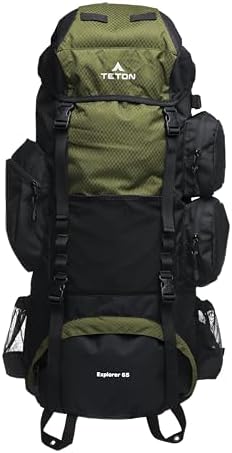 Visit on Amazon → Visit on Amazon →Kelty Asher 55L internal frame |
55L, internal frame | Overnights and multi-day trips | The only real load hauler here. Torso length decides everything. Compresses for day use, but do not fill it just because you can. |
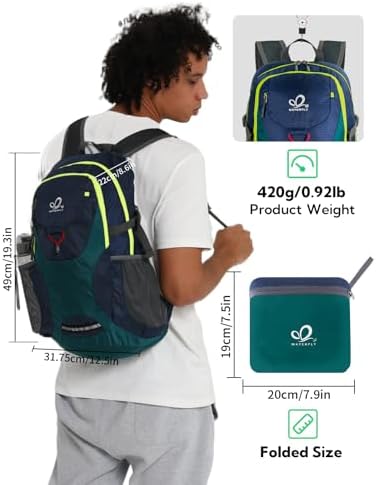 Visit on Amazon → Visit on Amazon →WATERFLY 30L packable daypack |
30L, lightweight, packable | Travel days, light day hikes, summit days | Packs down small. No meaningful hip belt transfer, so keep the load light. Use a liner in rain. |
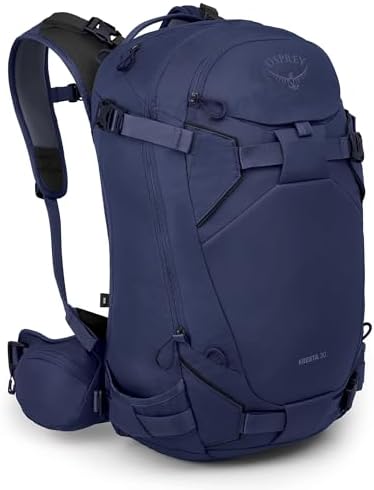 Visit on Amazon → Visit on Amazon →Osprey Kresta 30 |
30L, women's-specific | Backcountry ski and snowboard days, winter day tours | Built on a women's-specific fit, which matters most in the hip belt and shoulder straps. Osprey's warranty reputation is the other half of the value. |
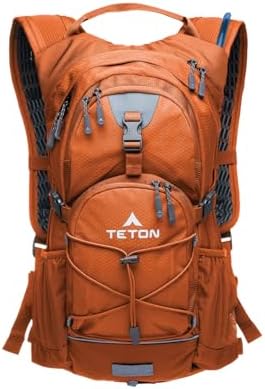 Visit on Amazon → Visit on Amazon →Teton Oasis/Trailrunner hydration pack |
18L or 22L, with a 2L or 3L bladder | Running, cycling, fast day hikes | Hydration first. The sewn-in rain cover is a real plus because it cannot be left in the car. Light loads only. |
The pattern in that table is the whole lesson. Two of these packs are built to carry weight on your hips. Two are built to carry a light load on your shoulders and get out of the way. Buying the wrong category is a bigger mistake than buying the wrong brand.
Osprey Kresta 30 Women's Backcountry Pack
The Kresta 30 is a women's-specific 30L pack aimed at backcountry ski and snowboard days. If you have been fitting yourself into a unisex pack and wondering why the hip belt keeps sliding up onto your waist, this is the category that fixes it. Women's-specific packs generally mean a shorter torso range, narrower shoulder straps, and a hip belt shaped for hips rather than a straight line across the front.
Osprey is the brand I recommend most often, and not just for the suspension. The warranty reputation is real, and on a pack you plan to keep for a decade, that matters as much as any feature. A 30L is the right size for a winter day tour where you are carrying layers, water, and safety gear rather than a sleeping kit.
The fit check is the same as any pack: torso first, then load it, then loosen the shoulders and see whether the belt holds. A women's-specific pack that is the wrong torso length is still the wrong pack. The category narrows the field. It does not replace the measurement.
Teton Oasis/Trailrunner Hydration Pack
This is the hydration-first option: a lightweight water pack with a 2L or 3L bladder, offered in 18L and 22L sizes, with a sewn-in rain cover, and sized to fit men and women. It is built for hiking, running, cycling, and biking, which is another way of saying fast and light.
The sewn-in rain cover is the detail I like most. A cover that lives attached to the pack cannot be forgotten at home, and I have watched more than one hiker discover that their cover was in the other bag at the trailhead. If you ride or run in wet country, that one feature earns its place.
Drinking on the move changes how you hydrate. You sip constantly instead of stopping to pull a bottle, which means you actually drink enough. Just remember that a bladder you never clean is a bladder you will eventually replace. Rinse it, dry it, and it will last.
Keep this pack in its lane. With a light load and a hydration focus, it is excellent. Load it like a backpacking pack and no bladder in the world will save your shoulders.
Should you buy the Kelty Asher 55L?
Yes, if you want one pack that covers overnights and multi-day trips. It is a 55L internal frame pack, and 55 liters compresses down for a day hike while still taking a weekend kit or a resupply run. The internal frame is what makes it the load carrier of this group.
The catch is discipline. A big volume with a light frame invites overloading, and a pack that is great at 25 pounds is miserable at 40. Weigh your kit before you commit to the volume, and measure your torso before you commit to the pack.
Buy it if you want range. Skip it if you only ever walk out for three hours, because the WATERFLY does that job for a lot less.
Should you buy the WATERFLY 30L Packable Daypack?
Yes, if you understand what it is. It is a 30L lightweight packable daypack, not a load hauler, and the value is in the packed size and the light day carry. It belongs in your travel bag or at the bottom of a big pack for summit days and town days.
There is no real hip belt transfer, so keep the load light and use a liner in rain. If you want a pack that carries 25 pounds comfortably, this is not it, and that is fine. Different job, different pack.