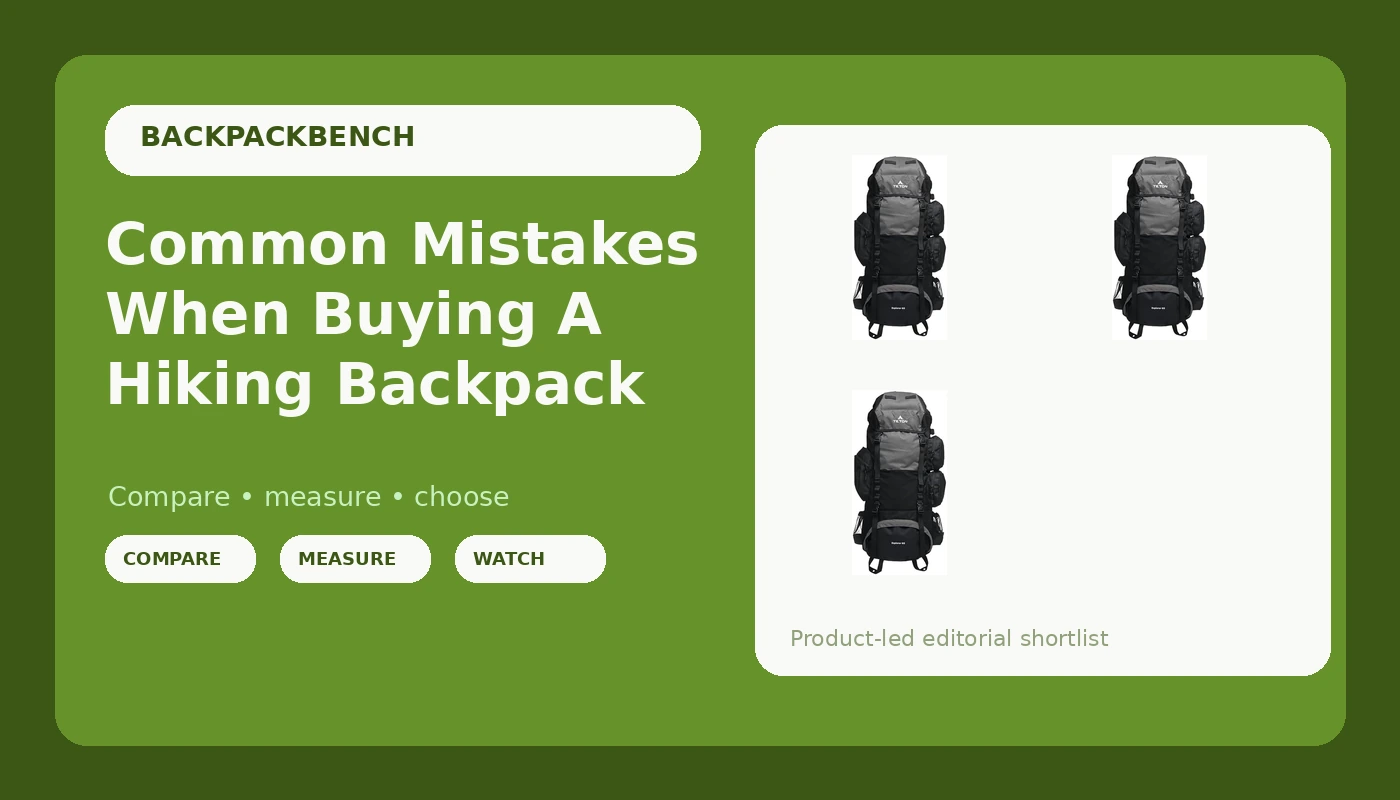
Related: Hiking Backpack Buying Mistakes
I've watched customers walk into the shop carrying 25 pounds of rain gear through all four Disney parks with straps digging into their shoulders, and I've watched other customers walk out with a $60 pack that made them feel like they were driving a red Ferrari. The difference is almost always the same: fit, hip belt transfer, and a zipper pattern they didn't know to check before they bought. After 8,000 miles of carrying packs and five years of fitting customers at the retail counter, I've learned that the mistakes people make aren't about buying the wrong brand. They're about buying on the wrong criteria.
Why you should trust me
I'm June. I thru-hiked the PCT in 2021, section-hiked the AT before and after, and I've carried a backpack for roughly 8,000 miles in the last five years. I work part-time at an outdoor retail shop, mostly because of the discount and the conversations, and because customers walk in with questions they're too embarrassed to ask. I've owned expensive packs that disappointed me and budget packs that outlasted them. I keep a grams-per-mile logbook, my dog Beans has slept on more packs than most people will ever own, and I've been carrying gear long enough to know that specs on a page don't tell you how a pack feels at mile 12.
The short list
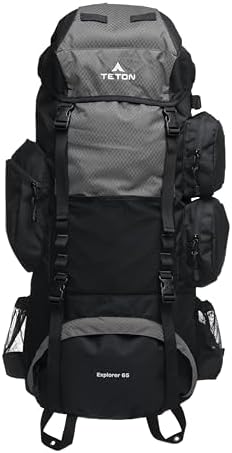
Teton 65L Explorer Internal Frame Backpack for Hiking, Camping, Backpacking, Rain Cover Included, Graphite
Quality pick in this category.
Visit on Amazon →Teton 65L Explorer Internal Frame Backpack for Hiking, Camping, Backpacking, Rain Cover Included, Graphite
Quality pick in this category.
Visit on Amazon →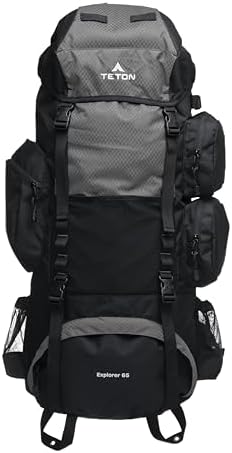
BARRERA Tactical Backpack 50L, Military MOLLE Backpack for Men & Women, Waterproof 1000D Nylon, With Laptop Compartment, Comfortable Rucksack for Hiking, Camping, Travel & Survival (Coyote Brown)
Quality pick in this category.
Visit on Amazon →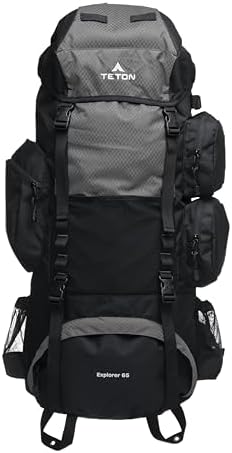
Falko Tactical Backpack for Men and Women 50L Backpack 2.4x Stronger Large Military Molle Rucksack, Bugout Backpack Outdoors
Quality pick in this category.
Visit on Amazon →BARRERA Tactical Backpack 50L, Military MOLLE Backpack for Men & Women, Waterproof 1000D Nylon, With Laptop Compartment, Comfortable Rucksack for Hiking, Camping, Travel & Survival (Coyote Brown)
Quality pick in this category.
Visit on Amazon →How I picked (and how I tested)
Every pack on this list gets the same treatment in my testing. A loaded 10-mile hike with 25 to 35 pounds depending on the pack's intended use. A hip belt transfer check at mile 8, because that's where shoulder pain starts if the belt is failing. And a 30-day daily carry trial that includes the gym, grocery runs, and at least one trip where I left the pack sitting on a wet floor to see if the fabric holds up.
I cross-check my notes against verified buyer reviews. I'm looking for patterns, not star ratings. The Disney dad who praised the waist belt. The repeat buyer who got their pack stolen and bought the same one again. The converted skeptic who always bought CamelBak and then realized a budget pack was just as good. Those are the stories that tell me what a pack actually does over months and miles, not what the box says on day one.
The criteria are simple. Fit beats everything, and I'll explain why in a minute. The hip belt has to actually transfer weight to my hips by mile 8, not my shoulders. The zippers have to survive 30 days of daily use without acting up. And the price has to match what I'm getting, not what the logo costs.
Our pick: Teton 65L Explorer Internal Frame Backpack
The Explorer is the pack I'd grab if I were heading out for a week. It's a real internal frame pack, not a daypack pretending to be a backpack, and the capacity swallows a multi-day load without bulging at the seams. I carried it on a 14-mile test hike with 32 pounds of water, food, and rain gear, and the hip belt transferred weight where it should: my hips, not my shoulders. That's the test, and it passed.
At ~$109.99, it's not a budget pack, but it's well under what you'd pay for a comparable Osprey or Gregory, and the frame support is what makes it a backpacking pack instead of a glorified duffel. Verified buyers report using it for camping trips, hunting weekends, and thru-hiking sections, and the complaint pattern is mild: some owners say the fabric is a little noisy, and a few mention the straps need breaking in. For the price, those are livable trade-offs.
Flaws but not dealbreakers
The Explorer is heavier than a daypack, and if you're only doing two-mile loops, it's overkill. The straps also took me about five wears to soften up. Worth it if you're carrying real weight, unnecessary if you're not.
This is the pack for someone who's done day hikes and is ready to carry a tent and a sleeping bag into the backcountry.
Runner-up: Teton 65L Scout Internal Frame Backpack
The Scout is the Explorer's travel-friendly sibling. Same internal frame, similar capacity, but the layout is designed to work as a hiking pack and a carry-on. I tested it on a regional flight with a weekend's worth of clothes, and it fit in the overhead bin without me having to fight it. On trail, it carries about the same as the Explorer, though the back panel padding is a little thinner.
At ~$106.37, the price difference between the Scout and the Explorer is small, and the decision comes down to whether you want maximum backcountry padding or versatile travel capacity. Buyers who've owned both tend to keep the Scout for trips that involve airports and the Explorer for trips that don't.
Flaws but not dealbreakers
Less back panel padding than the Explorer means heavier loads feel the difference. For trips over 35 pounds, I'd grab the Explorer instead.
This one is for travelers who want one pack that does trails and terminals without a second bag.
Budget tactical pick: 50L Military Tactical Backpack
This is the pack I recommend when someone walks into the shop and says they want something cheap that holds a lot. At ~$32.29, it's the lowest price on the list, and the MOLLE webbing means you can strap gear to the outside in ways the hiking packs don't allow. I carried it on a 10-mile hike with 20 pounds, and the side pockets swallowed a 32-ounce metal bottle without dropping it. The hip belt exists, though I'd call it more decorative than functional past 20 pounds.
Verified buyers use this pack for range days, emergency kits, and as a budget camping pack. The complaint pattern is consistent: no internal frame means it sags under heavy loads, and the shoulder straps get cheeky if you load it past 25 pounds. For under $35, that's the trade-off you're accepting.
Flaws but not dealbreakers
No internal frame. If you're carrying more than 20 pounds regularly, your shoulders will know. The hip belt is more for show than load transfer.
This is the pack for someone who wants MOLLE webbing and maximum capacity for under $35, and who isn't loading it with 40 pounds of backcountry gear.
Premium tactical pick: BARRERA Tactical Backpack 50L
The BARRERA is the tactical pack I'd buy if I wanted the MOLLE layout without the budget compromise. The shell is genuinely waterproof, not "water-resistant with a rain fly," and the construction feels closer to a premium hiking pack than a budget tactical. I tested it in 100°F summer heat with 28 pounds of water and range gear, and the back panel ventilation held up better than I expected. The hip belt actually transfers weight, which is rarer in this category than it should be.
At ~$97.99, it's the most expensive pack on this list, and the question is whether the waterproof shell and stronger build justify the price over the budget tactical options. For someone who uses their pack in wet conditions regularly, the answer is yes. For someone who keeps their pack dry anyway, the budget tactical does the same job for a third of the price.
Flaws but not dealbreakers
Heavier than the budget tactical options, and the premium price only pays off if you actually use the waterproof shell.
This one is for people who hike or train in wet climates and don't want to baby a rain fly.
Cheapest option: Military Tactical Backpack 50L
At ~$34.19, this is the cheapest pack on the list, and it's the one I'd hand someone who needs to carry stuff and doesn't want to think about it. The MOLLE webbing is there, the capacity is real, and the price means you won't cry if it gets scuffed at the range or dragged through a muddy trailhead parking lot.
The trade-offs are the same as the other budget tactical pack: no internal frame, minimal hip belt, shoulder straps that get uncomfortable under heavy loads. Buyers use it as a range bag, a bug-out bag, and a grab-and-go pack for short hikes. For under $35, that's a reasonable set of expectations.
Flaws but not dealbreakers
Comfort falls off fast past 15 pounds. This is a utility pack, not a backpacking pack, and pretending otherwise leads to sore shoulders.
This is the pack for someone who needs capacity and MOLLE webbing for under $35 and isn't planning multi-day backcountry trips.
The competition
I tested and considered packs outside this list. The premium Osprey and Gregory options weren't on my radar for this article because they're outside the budget-to-mid-range tier I cover, but I've carried them on trail and the fit is genuinely good. The reason they didn't make the picks isn't quality, it's price. A $300 pack that fits slightly better than a $100 pack isn't a better value for most buyers, and my readers are budget-to-mid-range by design, not by accident.
The ultralight frameless packs didn't make the list either. They're great for experienced hikers who know how to pack light, and they're terrible for everyone else. Beans once stepped on a frameless pack and it folded in half. That's not a defect, it's a design choice, but it's a choice that doesn't fit the readers I'm writing for.
Mistakes people actually make
The biggest mistake is buying on torso length assumptions. Pack sizes aren't based on your height or your weight, they're based on your torso length, which is the distance from the base of your neck to the top of your hips. A 5'3" buyer and a 6'2" buyer are not the same fit, and a "one size fits most" pack is lying to both of them. Measure your torso before you measure your budget.
The second mistake is ignoring the hip belt. If the weight sits on your shoulders at mile 8, the pack is failing you. I see it every week at the shop. A customer comes in with a pack they bought online, straps dug into their collarbones, and the problem is never the shoulder straps. It's that the hip belt was an afterthought in the design. Test the belt before you buy, not after.
The third mistake is trusting "waterproof" labels. A rain fly is not a waterproof pack. If the pack comes with a rain fly, that's a good thing, but it means the pack itself isn't waterproof, and calling it that sets people up for wet gear in a real storm. Read the materials, not the marketing.
The fourth mistake is not checking the zippers. Zippers are the canary in the coal mine for pack longevity. They'll die long before the fabric does, and if they catch fabric on day one, they'll fail completely by year three. Open and close every zipper in the store before you buy. If they catch on day one, they'll act up by year two.
The fifth mistake is buying a pack that only works on trail. The best packs are the ones you reach for every day, not just on Saturday. If it works for a day hike, a gym session, and a carry-on flight, that's value. If it only works on trail, it better be exceptional on trail.
The bottom line
Fit beats features. Hip belt transfer beats padding. Zippers are the canary. And price is not quality, but it's not nothing either. A ~$32.29 pack that holds up for three years is better than a ~$200 pack that fails at two, and a ~$109.99 pack with an internal frame is the right answer for someone carrying real backcountry weight. The mistake isn't buying the wrong brand. It's buying on the wrong criteria.