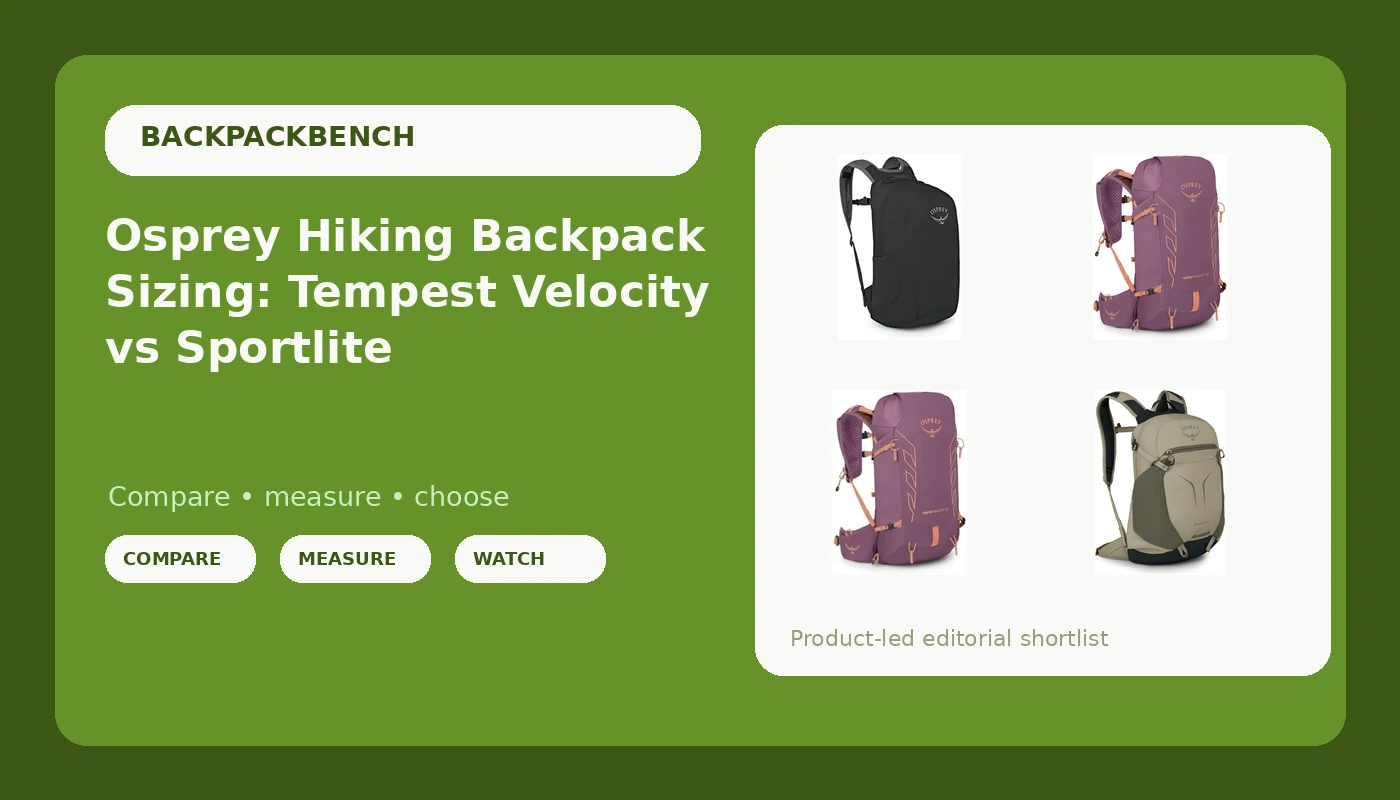
I have fit hiking packs across a retail counter for years now, and I can count on one hand the number of people who walked in asking the right question first. Almost everyone asks about liters. Almost nobody asks about torso length, which is the number that decides whether a pack carries well or rides like a sack of groceries. So this is an Osprey hiking backpack sizing comparison, built around the four packs I keep pulling off the wall for customers: two size runs of the Tempest Velocity 20L, the Sportlite 15L, and the Ultralight Collapsible Stuff Pack that people toss in the cart as an afterthought.
For most women day hiking with 10 to 20 pounds, the Tempest Velocity 20L in the size that matches your measured torso is the right answer, and the Sportlite 15L is the better answer if you never carry more than a shell, water, and lunch.
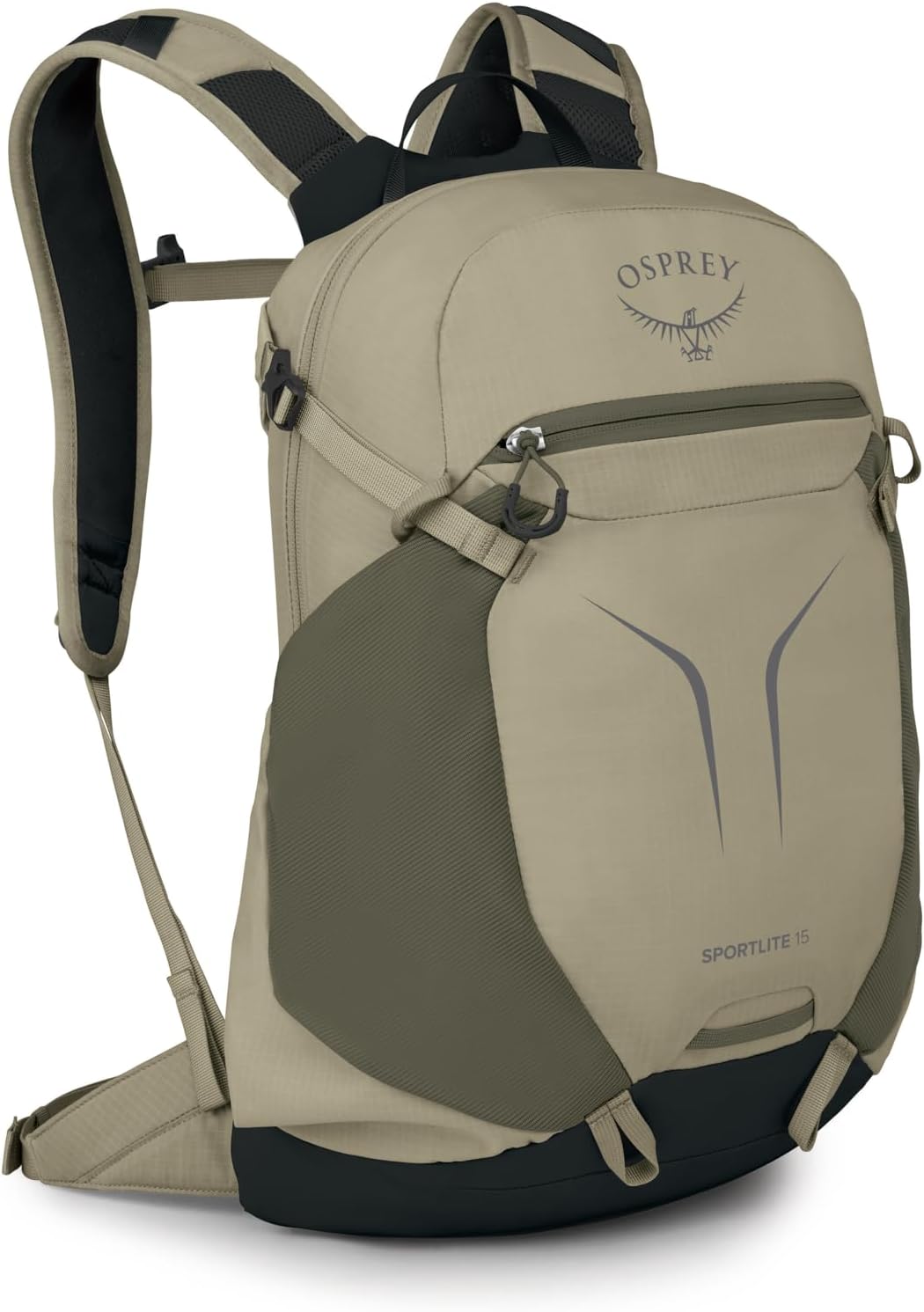
Osprey Sportlite 15L Lightweight Hiking Backpack, Tan OS
The simplest pack in this group to own. One size means there is no sizing decision to get wrong, and the stripped-down build keeps the pack honest for fast, light day hikes
One size also means take it or leave it. If your torso falls outside what it accommodates, there is nothing to adjust, and 15 liters fills faster than you think
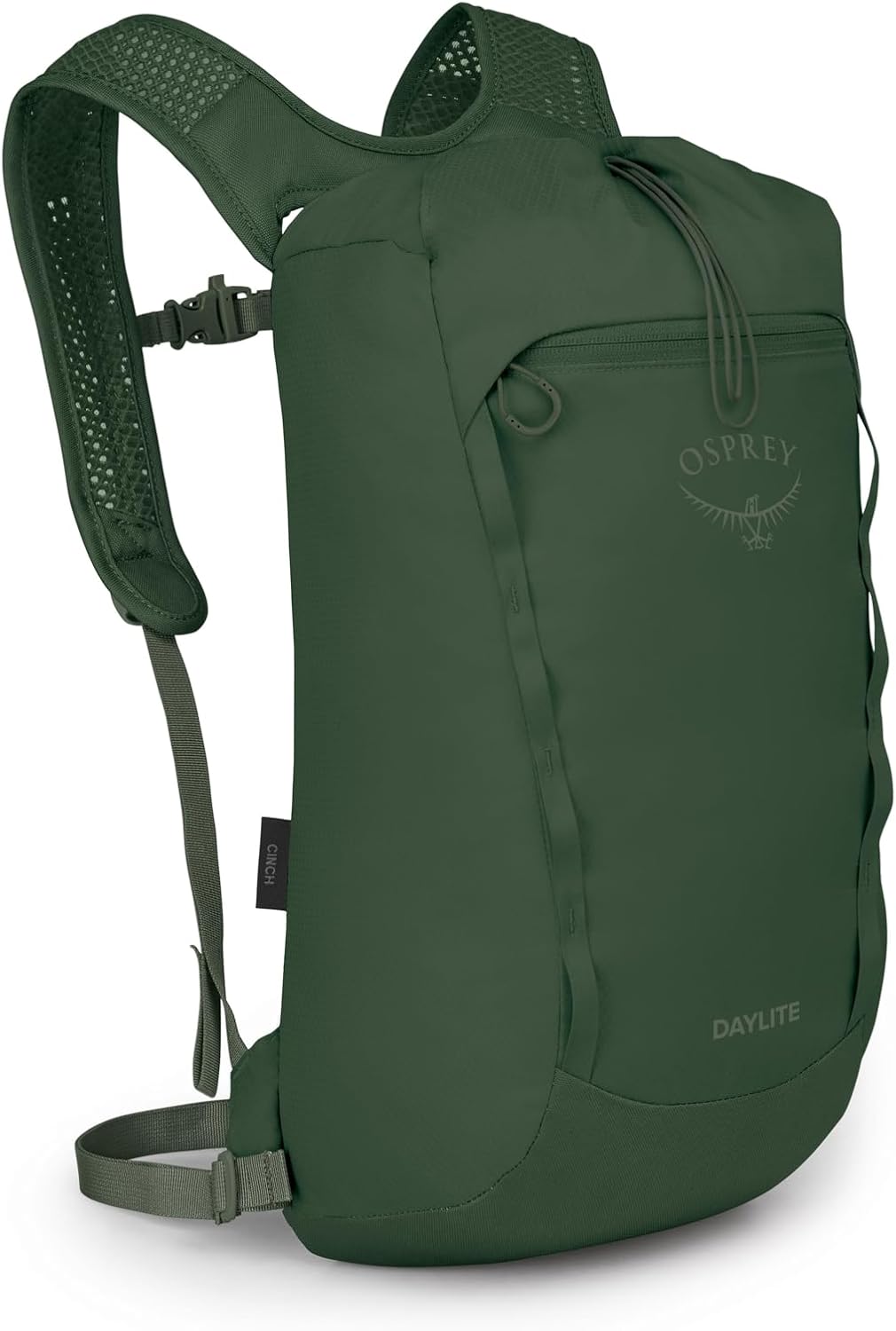
Osprey Ultralight Collapsible Stuff Pack, Black OS
Collapses down small, so it earns its place inside a bigger pack as a summit bag, a town bag, or a laundry sack on a road trip
It is not a hiking pack. Treat it as a stuff sack with straps and you will be happy; expect it to carry weight and you will be disappointed
Osprey Tempest Velocity 20L Women's Hiking Backpack, Tan WXS-S
A women's-specific harness in the shorter size run, with 20 liters of room for layers, food, and a filter without turning into a weekend pack
If you are between sizes or long in the torso, this is the wrong row on the page, and ordering it anyway is how people end up with a pack that rides on their shoulders
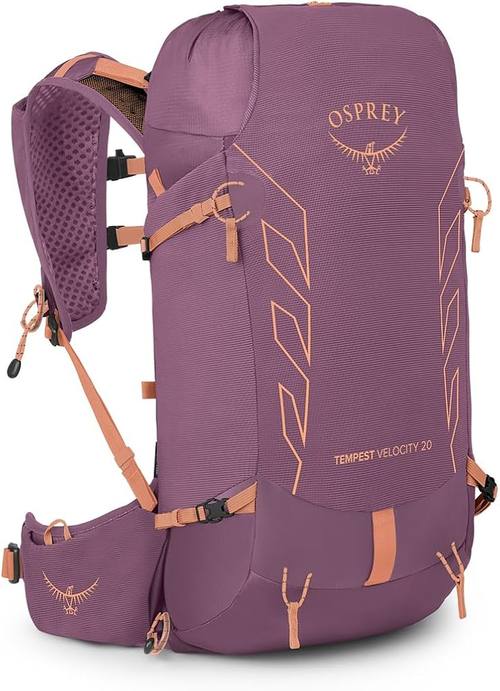
Osprey Tempest Velocity 20L Women's Hiking Backpack, Tan WM-L
The same pack, cut for a longer torso, which is the difference between load on your hips and load on your collarbones
Two listings that look identical in a search result are easy to mix up, and the size code is the only thing separating them
Prices and availability were captured from Amazon Creators API and may change.
How I think about pack sizing
The measurement that matters is torso length, taken from the bony bump at the base of your neck, C7, down to the top of your hip bones, the iliac crest. That is the span your pack has to cover. Get it wrong and no amount of adjustment saves you, because the hip belt will land somewhere other than your hips, and a hip belt that sits above the iliac crest slides up onto your waist the moment you start walking.
Everything else on a pack is organization layered on top of that one relationship. That is why I tell people to measure first and shop second. A pack that fits your torso will carry a load better than a more expensive pack that does not, every single time.
The other half of the equation is where the weight actually sits. The hip belt should take the majority of a loaded pack, and your shoulder straps should be doing little more than keeping the pack against your back. If you can slide a hand under your shoulder strap at mile three and feel real pressure, the load is not transferring, and the fix is almost always sizing rather than padding.
What the two Tempest Velocity rows actually mean
This is the part of the comparison that trips people up, and it is the reason I built this article around these four packs in the first place.
The Osprey Tempest Velocity 20L is listed here twice, and both listings use the same product name and the same tan color. What separates them is the size code. One is the shorter women's run and one is the longer women's run, and they are not interchangeable. Osprey splits its women's-specific packs this way because a five foot two hiker and a five foot ten hiker need different torso spans from the same harness design.
So the two rows are not a competition. They are one recommendation with a fork in it. Read the size code before you order, and if you do not know your torso length, measure it with a soft tape and a friend before you spend anything. I have watched people order the wrong run, hike once, and conclude that the pack is uncomfortable, when the pack was fine and the size was wrong.
What the Tempest Velocity gives you over the Sportlite is volume and a women's-specific cut. Twenty liters swallows a rain shell, a puffy, lunch, two liters of water, and a first aid kit without a fight. Fifteen liters makes you choose. That is the real difference between these packs, not a feature list.
The Sportlite 15L, and why one size is a feature
The Osprey Sportlite 15L Lightweight Hiking Backpack is the pack I hand to people who describe a hike as three hours and a sandwich. It is one size, marked OS, and that single size is both the pitch and the catch.
The pitch is that there is nothing to decide. You do not have to measure, you do not have to compare two listings, you do not have to wonder whether you got it right. For a lot of people, that simplicity is worth more than a dialed-in fit, because they are hiking a flat local trail on a Saturday and the pack is carrying water and a layer.
The catch is that a one-size pack fits a range, not a person. If your torso falls comfortably inside that range, you will never think about it. If it does not, the pack will ride high or low and there is nothing to adjust. That is the honest trade. I would rather tell someone that up front than sell them a pack they will resent by mile four.
What the Sportlite has going for it beyond simplicity is restraint. A 15 liter pack for day hikes should not be a puzzle box. Fewer pockets, fewer straps, fewer things to snag on brush. The worst pocket on a pack is worse than no pocket, and a light daypack is where that rule earns its keep.
The Ultralight Collapsible Stuff Pack is not competing here
I include the Osprey Ultralight Collapsible Stuff Pack in this comparison because it shows up in the same search results and people reasonably assume it is a small hiking pack. It is not, and judging it as one would be unfair to it.
It is a stuff pack. It collapses down small, which makes it useful in three situations I run into constantly. First, as a summit bag: you leave your main pack at camp or at a trail junction and carry the essentials up. Second, as a travel and town bag: it disappears into a duffel and reappears when you need to carry groceries. Third, as a way to organize soft goods inside a larger pack or a suitcase.
Where it fails is the place people try to use it, which is as a primary day hiking pack with a real load. There is no suspension structure to speak of, so weight goes onto your shoulders and stays there. If your day hike involves more than a water bottle and a windbreaker, the Sportlite or the Tempest Velocity is the correct purchase, and the stuff pack is an accessory you add later if you want one.
The trade-offs, spelled out
Here is the decision in plain terms, without the table.
If you want one pack and you want it to be right, get the Tempest Velocity 20L and get the size run that matches your torso. It is the only pack in this group that comes in two torso lengths, and that is the whole reason it wins for anyone carrying a real day load. Twenty liters is also the volume most day hikers actually need once they stop pretending they will leave the puffy at home.
If you want the simplest possible answer and your torso is unremarkable, get the Sportlite 15L. You give up volume and you give up sizing choice, and in exchange you get a pack that is easy to own and easy to hand to a friend.
If you want a second bag that lives inside the first one, get the Ultralight Collapsible Stuff Pack. It is a small, cheap addition that solves a specific problem, and it should never be your only pack.
The thing that does not appear in any of these rows is the number on the price tag, because prices move and fit does not. Check current Amazon price when you are ready, but do not let a sale talk you into the wrong size run. A discounted pack that does not fit is still a bad pack.
How to pick in the store in ten minutes
Bring a soft tape measure, or ask someone to measure you. Find C7 at the base of your neck, find the top of your hip bones, and write the number down. That number decides the size run on the Tempest Velocity, and it decides whether the one-size Sportlite is a reasonable gamble or a waste of your time.
Then load the pack the way you actually hike. Not the way you hike in your imagination. If you carry two liters of water and a camera, put two liters of water and a camera in it, walk the length of the store, and check where the belt sits. It should be on your hips, not your waist, and your shoulders should feel almost nothing.
Last, check the pockets you will use while walking. Can you reach a snack and a phone without taking the pack off? A pocket that requires you to stop, unclip, and dig is a pocket that will stay empty. That is the kind of thing that decides whether a pack gets used or hangs in a closet, and it matters more than any spec sheet line.
What I would carry
For a three hour local trail in the Cascades with a shell, water, and lunch, the Sportlite 15L does the job and I would not overthink it.
For anything longer, anything with elevation, or anything where the weather might turn, I want the Tempest Velocity 20L in my size, because the extra five liters mean I stop negotiating with myself about what to leave behind. The two size runs exist for a reason, and picking the right one is the entire point of this comparison.
And the stuff pack rides along in whichever one I take, folded into a corner, waiting for the day I need a summit bag.