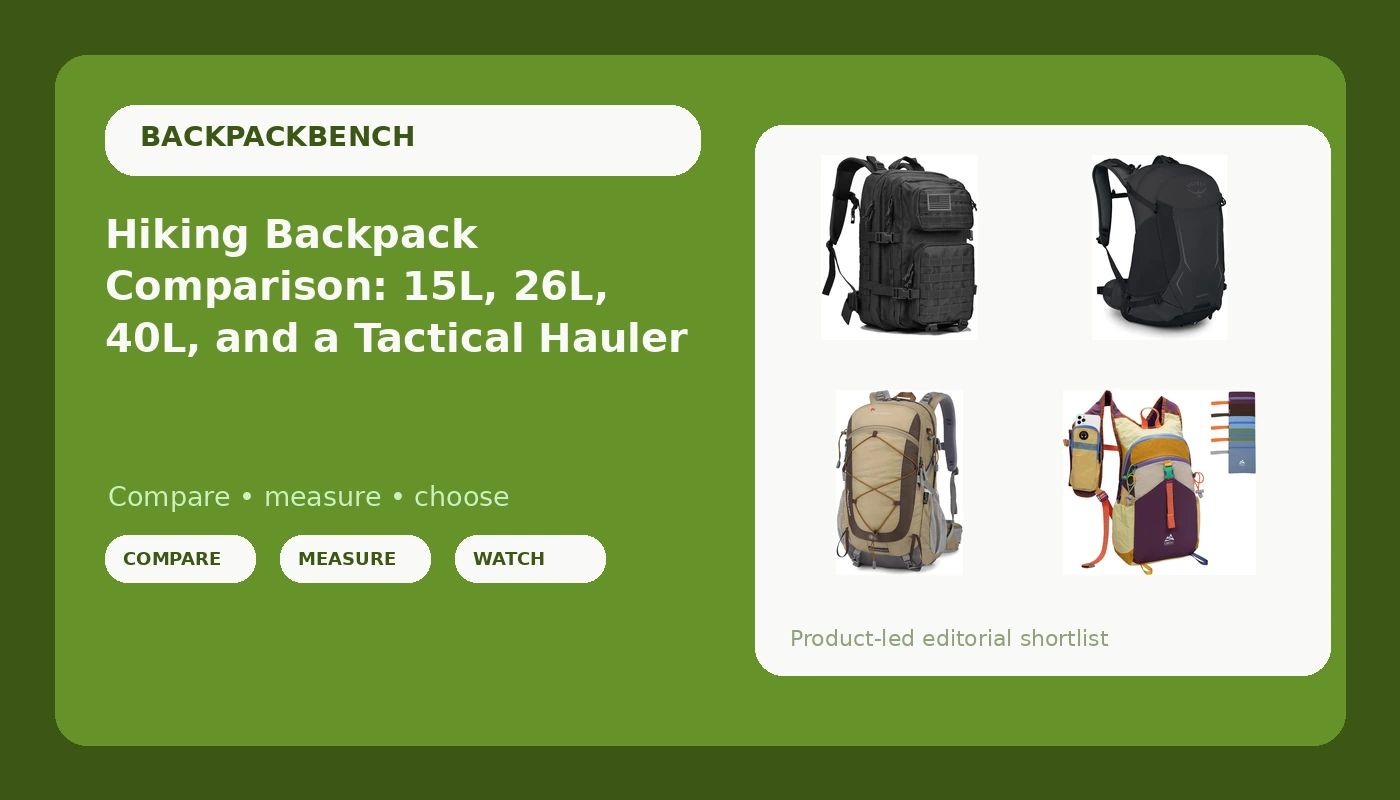
I have carried a backpack roughly 8,000 miles in the last five years, and I still open every gear conversation the same way: load the pack, put it on, and walk ten miles before deciding anything. This lightweight hiking backpacks comparison follows that rule. I am not going to crown one winner, because the winner depends on your torso length, your load, and whether you are walking to a summit or walking to a train station. What I can do is explain what each of these four packs is actually for, where it will annoy you, and which one I would hand across the shop counter.
The four packs here cover nearly the whole range of what people buy. There is a 15L packable daypack, a 26L ventilated daypack, a 40L overnight pack, and a large tactical assault pack. They are not four versions of the same product. They are four different answers to one question: how much do I need to carry, and how far?
The short answer: the Osprey Hikelite 26L is the pack I would recommend to the most people, because it sits in the middle of every trade-off. If you need overnight volume without a premium price, the MOUNTAINTOP 40L is the pick. The 15L packable daypack and the REEBOW GEAR tactical pack are specialists, and you should only buy them for the specific job each one does well.
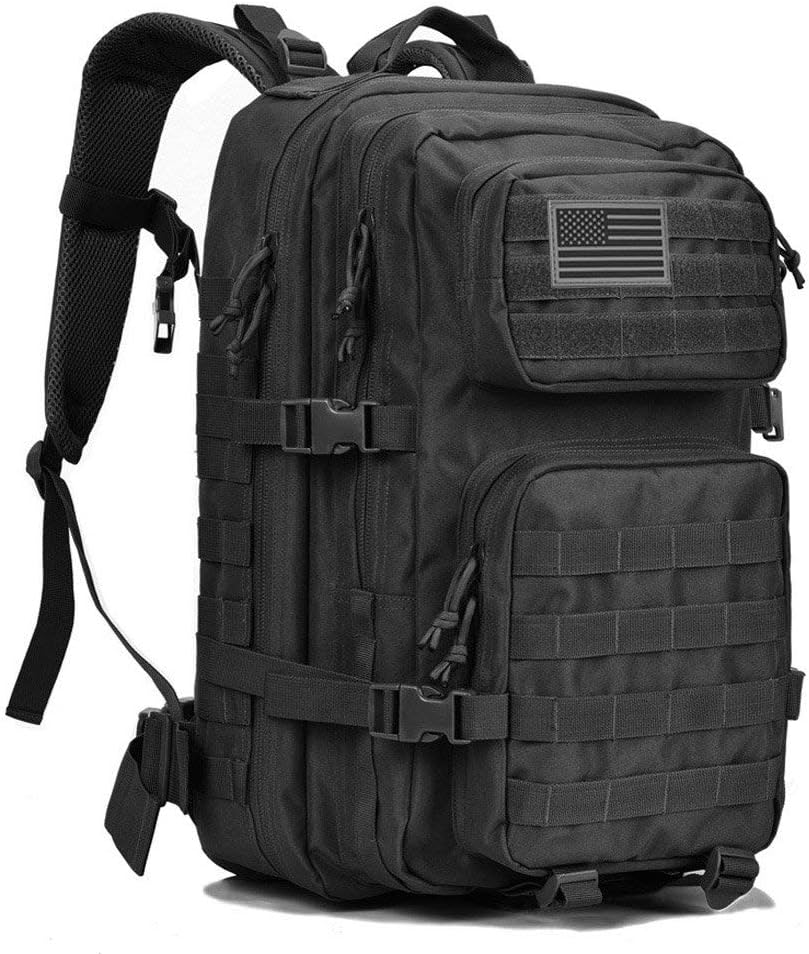
REEBOW GEAR Military Tactical Backpack Large Army 3 Day Assault Pack Molle Bag Backpacks
Enormous volume, MOLLE webbing for attaching gear, tough fabric, and the lowest cost per liter in this group
No ventilated hiking suspension, no torso sizing, and a boxy shape that carries weight high and away from your back
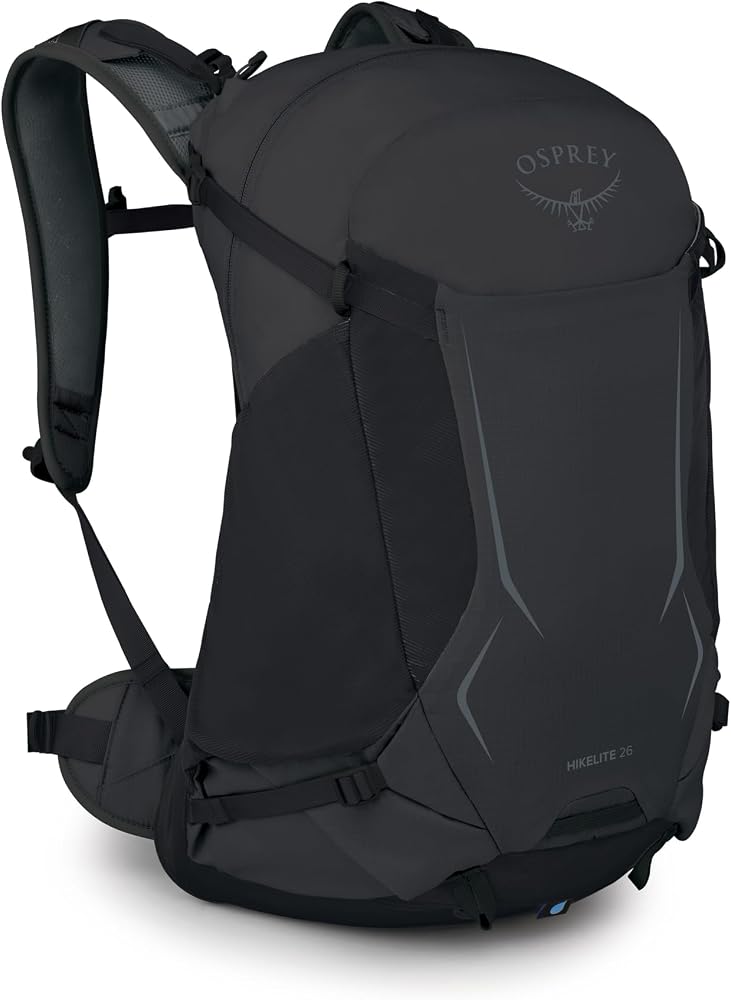
Osprey Hikelite 26L Hiking Backpack, Black OS
The most refined carry in the group, from a brand with a long record of suspension design and a generous warranty
26 liters runs out of room the moment you add a sleeping bag, and the fit depends on getting your torso size right
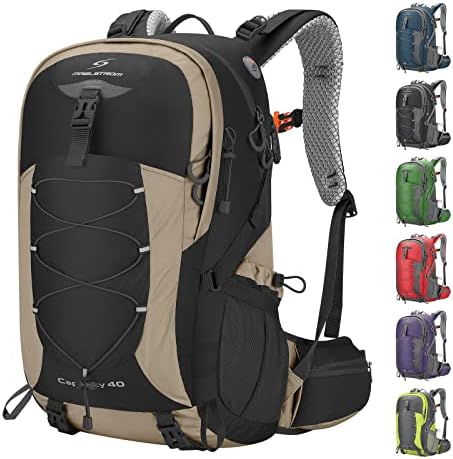
MOUNTAINTOP 40L Hiking Backpack, Lightweight Outdoor Backpacking Pack
Real overnight capacity in a lightweight package at a budget price
The frame and belt have limits, so heavy loads transfer less cleanly than they do on premium packs
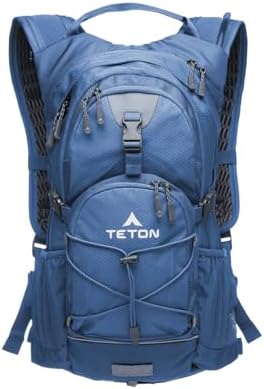
15L Small Hiking Backpack Travel Daypack Colorful Lightweight Packable Foldable Casual Backpack for Women Men
Packs down small, weighs almost nothing, and costs less than a dinner out
No frame and no meaningful hip belt, so every ounce rides on your shoulders
Prices and availability were captured from Amazon Creators API and may change.
How I compare packs
Every pack I write about gets judged in the same order, and the order matters more than the features list.
- Torso length. Measure from the bony bump at the base of your neck, C7, down to the top of your hip bones. That number, not your height, decides which sizes fit you. Get it wrong and no amount of strap pulling will save the carry.
- Hip belt transfer. Load the pack with what you actually plan to carry and notice where the weight sits. The hip belt does about 80% of the work on a loaded hike. If your shoulders ache at mile 8, the belt is not doing its job.
- Weight at mile 8, not weight on the tag. Tag weight is a number on a spreadsheet. Mile 8 is the truth.
- The worst pocket. A pocket you cannot reach while walking is worse than no pocket at all. This is where inexpensive packs give themselves away first.
That is the whole test. It is not glamorous, and it does not fit on a marketing page, but it is the reason two people can buy the same pack and have completely different experiences with it.
The 15L packable daypack: for the trip, not the trail
The 15L Small Hiking Backpack is the lightest option in this comparison by a wide margin. It is packable and foldable, which is the entire point: it disappears into a suitcase, a glovebox, or a larger pack until you need it.
Where it shines is travel and casual use. A hotel day trip, a city walk, a festival, a short trail with a water bottle and a jacket. It is also a genuinely good choice for a kid's first pack, because there is not much to it and nothing to adjust wrong.
Where it fails is anywhere you need load transfer. There is no frame and no hip belt worth the name, so 100% of the weight sits on your shoulders. Under about 10 pounds that is fine. Over that, you will feel it by the second mile. It is also not the pack for a real hike with layers, food, and water for a full day in the Pacific Northwest, where the weather changes three times before lunch.
Buy it as a second pack, not as your only pack.
Osprey Hikelite 26L: the pack in the middle
If you only own one pack for day hikes, 26 liters is close to the ideal volume, and this is the one I would point most people toward first. Osprey has built its reputation on suspension design and on a warranty that people actually use, and the Hikelite line carries that reputation into a lighter, simpler package than the big load haulers.
The practical argument for this pack is that it handles the ordinary day hike without drama. Layers, lunch, two liters of water, a first aid kit, a camera, and a rain shell all fit with room to spare. The ventilated back panel matters more than the spec sheet suggests, because a sweaty back at mile 3 turns into a cold back at mile 6 when you stop for a snack.
The trade-offs are honest ones. Twenty-six liters is a daypack volume, and no amount of strap tightening turns it into an overnight pack. If your kit list includes a sleeping bag and a stove, you are shopping in the wrong size class. The other consideration is fit: this is a pack where torso sizing does the work, so measure before you buy rather than guessing from your height. Check current Amazon price on the Hikelite if you want a daypack you will still be carrying in five years.
MOUNTAINTOP 40L: overnight volume on a budget
Forty liters is the smallest volume that makes a real overnight trip comfortable, and this pack delivers that capacity in a lightweight build at a price that does not require a gear budget conversation with your partner.
For a first backpacking trip, a weekend at a state park, or a hut trip where you are not carrying a tent, 40 liters is a sensible place to start. The MOUNTAINTOP also works as a travel pack for people who want one bag for a week, because it swallows clothes in a way a 26L pack simply cannot.
The honest limitation is load transfer at the top of its range. Budget packs save money in the frame and the hip belt, and that is exactly where a heavy load gets tested. At 20 pounds this pack is pleasant. At 35 pounds, a premium suspension will feel noticeably better on your hips, and you will notice the difference by mile 8. That is not a defect, it is a price point. Buy it if your total load stays moderate, and step up if you plan to carry a bear can and a week of food.
REEBOW GEAR tactical pack: a hauler, not a hiker
The REEBOW GEAR Military Tactical Backpack is the odd one out here, and that is not a criticism. It is a large assault-style pack with MOLLE webbing across the exterior, rugged fabric, and enough capacity for a multi-day gear load. It is built for a different job than a ventilated hiking pack.
Where it earns its place: truck camping, range days, emergency kits, gear hauling, and any situation where you want to strap things to the outside of a bag and not worry about the fabric. The MOLLE real estate is the feature that matters most here, and it is the reason people keep buying this style of pack.
Where it loses ground for hiking: the shape is boxy, which means the load sits further from your spine than it does in a hiking-specific design. There is no ventilated back panel, so your back will run warm on a climb. There is no torso sizing, so fit is a matter of strap adjustment rather than matching the pack to your measurements. And the pack itself is heavy before you put anything in it, which matters on a trail and does not matter at all in a truck bed.
If your definition of hiking is a flat four-mile loop with a light load, it will do the job. If you are climbing 3,000 feet, buy a hiking pack.
The trade-offs nobody prints on the spec sheet
A few things that separate a pack you keep from a pack you resell.
Hip belts that ride up. A belt that slides onto your waist instead of staying on your hip bones is the single most common complaint I hear. It usually means the torso length is wrong, not that the belt is broken.
Pockets you cannot reach. Shoulder-strap pockets and hip belt pockets should be reachable with the pack on. If you have to take the pack off to get a snack, that pocket does not exist.
Rain covers that fit the pack but not the load. A cover sized for an empty pack will not stretch over a full one. Test it loaded, not on the shop floor.
Spec sheets that list 25 features and no torso range. If a manufacturer will not publish a torso range, that tells you something about who they expect to fit.
Capacity is not the same as comfort
The most common mistake I see is buying volume instead of fit. A 40L pack that does not match your torso will hurt more than a 26L pack that does, and this is true at every price point. Volume is what you can carry. Fit is whether you can carry it.
The second most common mistake is buying for the trip you might take once instead of the trips you actually take. Most people reading this hike day trails far more often than they backpack overnight. If that is you, the 26L class is the right home base, and a packable 15L daypack covers the travel days.
Who should buy which
- Day hikers who want one pack: the Osprey Hikelite 26L.
- Travelers who want a pack that vanishes into a suitcase: the 15L packable daypack.
- Weekend backpackers on a budget: the MOUNTAINTOP 40L.
- Campers, range shooters, and gear haulers: the REEBOW GEAR tactical pack.
- Anyone buying their first pack: measure your torso first, then decide.
The bottom line
None of these four packs is a bad purchase. They are aimed at four different buyers, and the fastest way to be unhappy is to buy the one that does not match how you actually use a pack. The Osprey Hikelite 26L is the safest recommendation for the widest group, the MOUNTAINTOP 40L is the value pick for overnight volume, the 15L packable is the travel and backup option, and the REEBOW GEAR tactical pack is the hauler for people who need to strap gear to the outside and do not care about back ventilation.
Measure your torso, load the pack with your real kit, and walk ten miles before you decide. The trail tells you in the first mile whether the pack fits.