Related: How to Measure Torso Length Before You Buy a Pack
Most people shopping for a hiking backpack start with the wrong number. They fixate on volume, 15 liters or 40 or 55, and then wonder why the pack that felt fine in the store is riding up onto their ribs by mile three. Hiking backpack sizes do matter, but volume is the second question you answer. The first is torso length. The third is what you are actually carrying.
I fit packs part time in an outdoor shop in Seattle, and I have spent a lot of miles on long trails. The questions at the counter are always the same. Is 40 liters enough? Do I need an internal frame? Is a rain cover worth the fuss? So here are four packs doing four different jobs, from a 15 liter stuffable daypack to a 55 liter internal frame hauler, plus the fit logic that tells you which one belongs on your back.
None of these are status symbols. They are tools, and the right one is the one that puts weight on your hips instead of your shoulders.
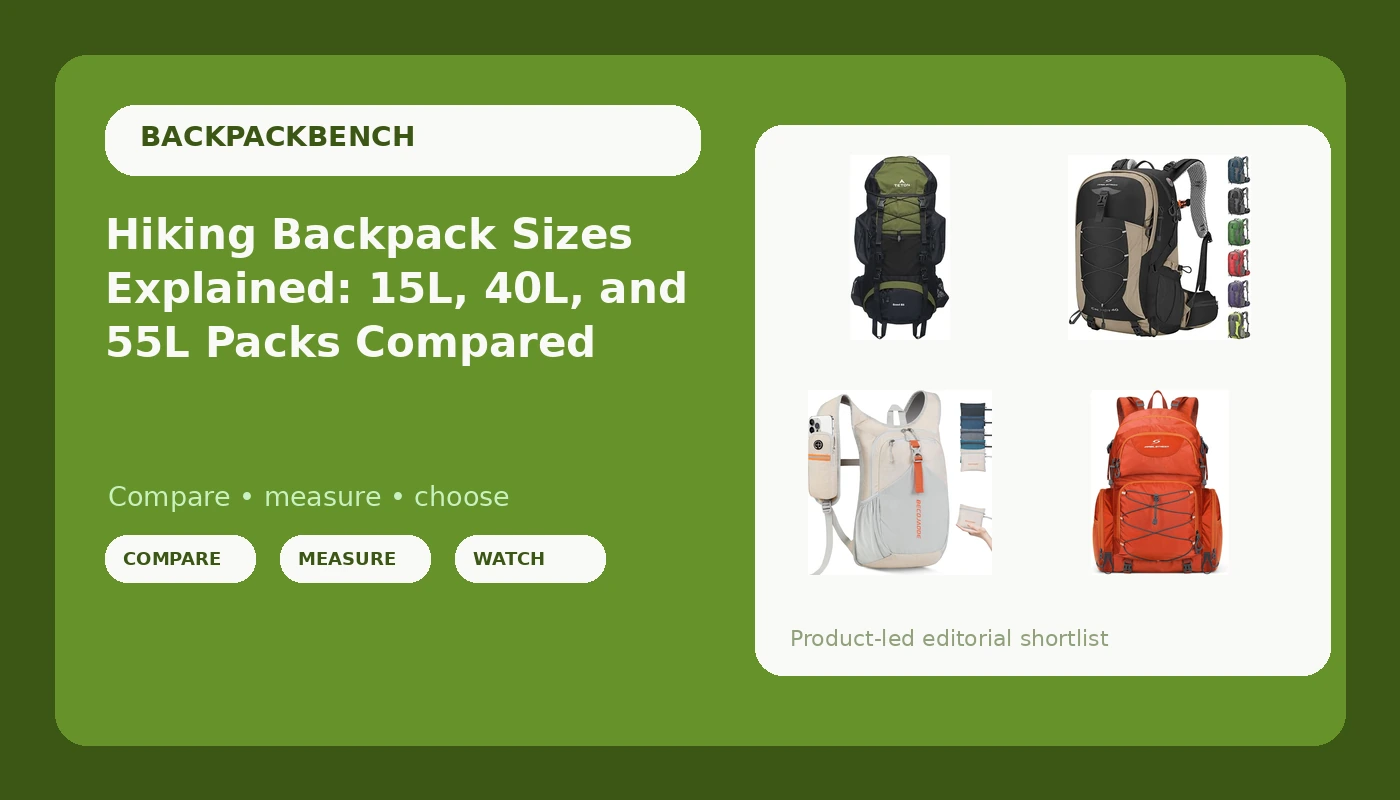
Best for Overnight Trips: Teton 55L Scout Internal Frame Backpack
The Teton 55L Scout Internal Frame Backpack is the only pack in this group built for sleeping out. That internal frame is the whole point. A frame is what lets a hip belt do its job, because it gives the load something to push against instead of sagging into your shoulders. On a 55 liter pack carrying a shelter, a sleeping bag, food, and water, that transfer is the difference between a good day and a miserable one.
Fifty-five liters is also the honest size for a first backpacking trip. It is big enough that you are not playing Tetris with your sleeping bag at 6 a.m., and small enough that you still have to think about what you bring. The included rain cover matters here more than it does on a daypack, because an overnight load is the load most likely to get soaked through when the weather turns.
Olive is a small thing, but it is the color that hides trail dust and looks less like a suitcase in a hostel. If your trips involve a tent, this is the one to measure your torso for first.
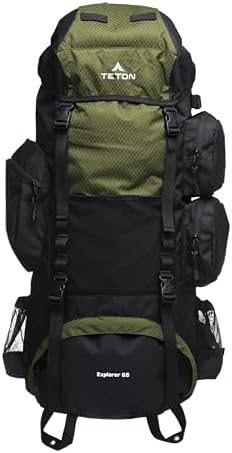
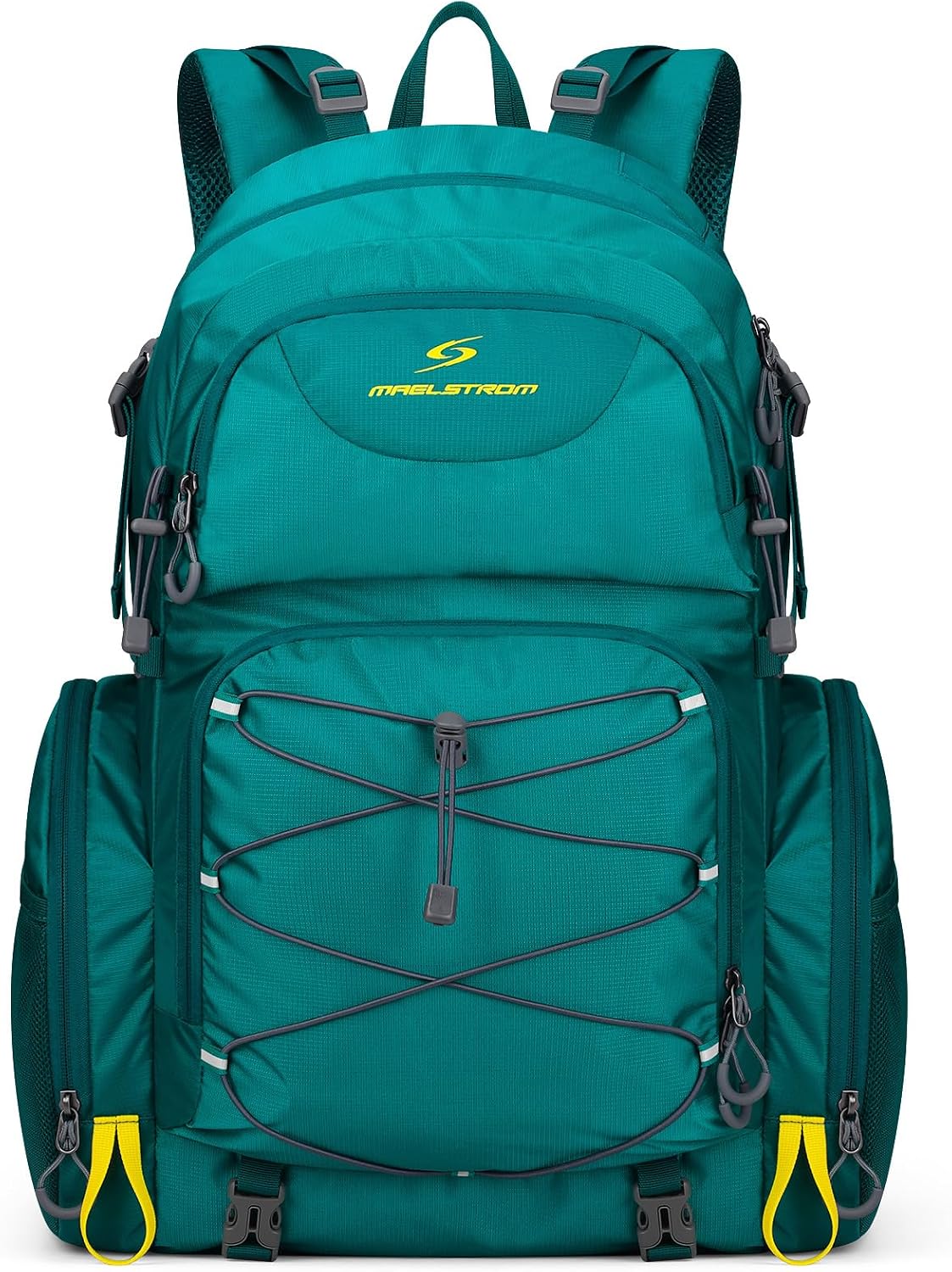
Best All-Around Daypack: Maelstrom 40L Hiking Backpack
The Maelstrom 40L Hiking Backpack is the pack I would hand to most people first. Forty liters is the most useful single volume in hiking. It swallows a puffy layer, a rain shell, lunch, three liters of water, a first aid kit, and a camera without turning into a duffel bag on your spine, and it stays light enough that you forget you are wearing it on the flat sections.
It is a lightweight camping daypack with a rain cover included, which is the pairing that makes sense for three-season hiking in the Pacific Northwest. A pack this size is also the one that punishes bad packing habits. If it feels heavy at mile eight, the problem is usually the load, not the liter count.
This is the volume I recommend for long day hikes, hut trips, and travel where you want one bag for the trail and the train. It is not a mountaineering pack and it is not pretending to be.
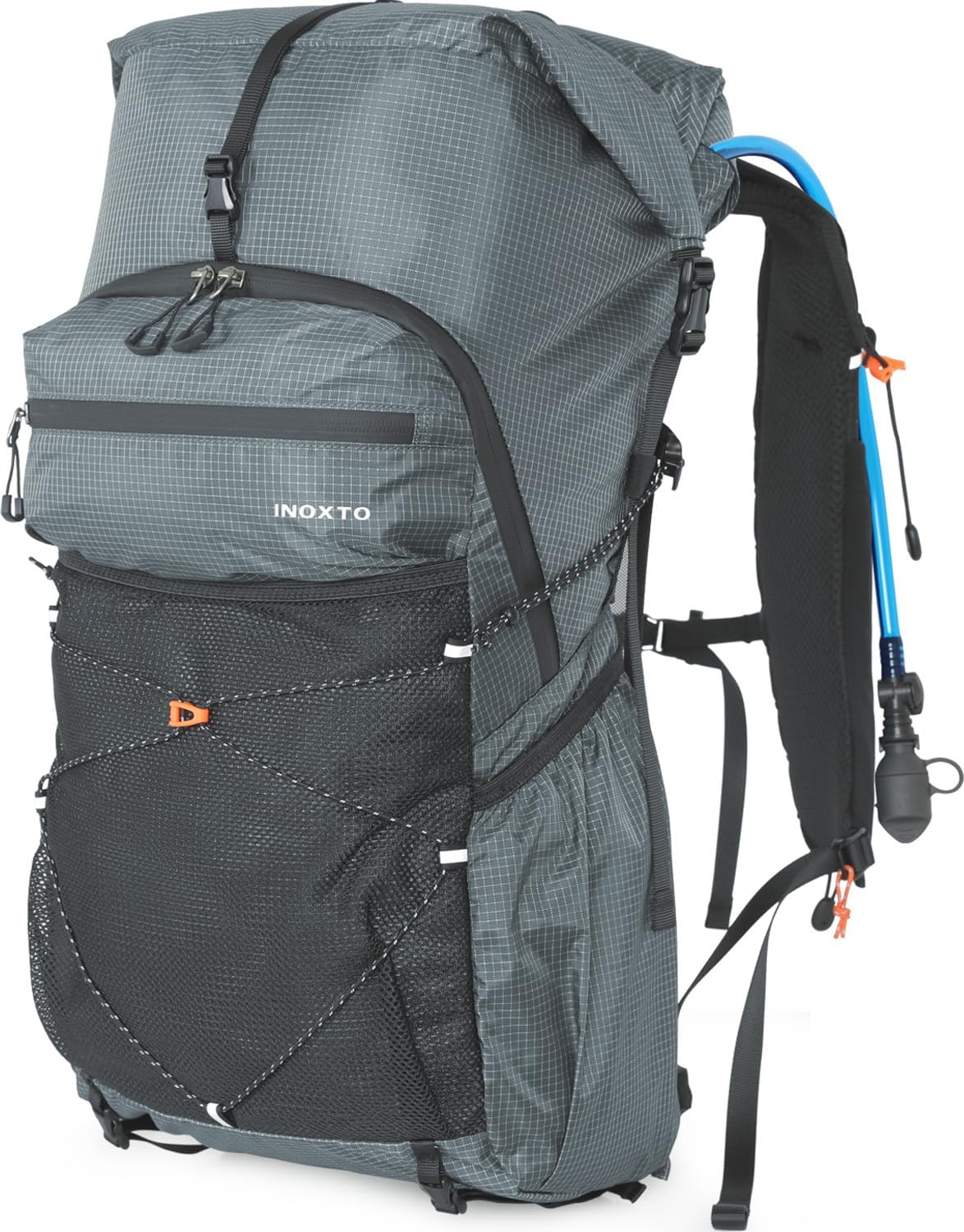
Best Packable Backup: BECOJADDE 15L Small Hiking Backpack
The BECOJADDE 15L Small Hiking Backpack is the one that lives in the bottom of a bigger bag. It is foldable and packable, it is ultralight, and at 15 liters it holds exactly what a short walk needs: water, a snack, a shell, a phone, keys. Beige, if you want something that does not look like technical gear in a city.
Here is the honest framing. A 15 liter packable is a second pack, not a primary pack. It is for the evening walk after you set up camp, the summit side trip where you leave the big load behind, the travel day where you want a daypack that disappears into your luggage. It is not a pack you load with 25 pounds, because there is no frame and nothing to transfer that weight to your hips.
Buy it for the job it is built for and it will earn its place. Buy it as your only pack and you will be unhappy by the second mile.
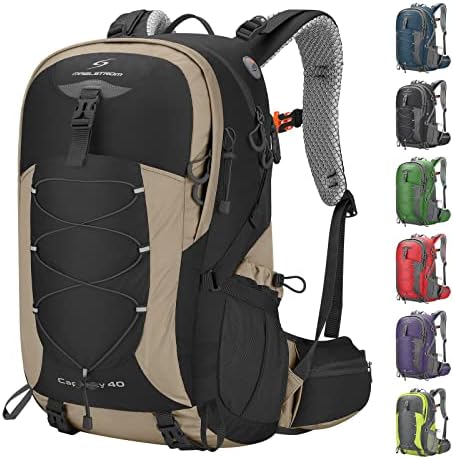
Best for Wet Weather: Maelstrom 40L Waterproof Hiking Backpack
The Maelstrom 40L Waterproof Hiking Backpack is the same useful volume as the pack above with a different answer to rain. Instead of a cover you deploy when the sky opens, the protection is in the pack itself. That is the better choice if you hike in sustained wet weather, if you take ferries and buses with your gear on your back, or if you have ever watched a rain cover flap itself loose in a wind gust and disappear down a slope.
It is also a genuinely good lightweight travel daypack. A 40 liter bag that shrugs off weather is the one you can carry through a drizzly city all day and then take up a trail the next morning without repacking.
The tradeoff is simple. A waterproof pack is a little more committed, and you still want to keep the important stuff, your phone, your map, your sleeping bag if you brought one, inside a dry bag or a zipper bag. Waterproof is a strong claim, not an invitation to swim.
Fit first: the three numbers that decide everything
Torso length is the spec everyone ignores and the one that matters most. It is the measurement from the bump at the base of your neck, C7, down to the top of your hip bones, the iliac crest. Not your height. Not your shirt size. Two people the same height can need different pack sizes, which is why "I'm 5 foot 9, what size do I get" has no answer.
Hip belt transfer is the second number, and it is not a number at all. It is how much of the load actually sits on your hips instead of hanging from your shoulders. A hip belt should cup the top of your hip bones and carry most of the weight. If it rides up onto your waist, the pack is either the wrong torso length or the belt is too loose, and by mile eight your shoulders will file a complaint.
Base weight is the third. That is everything in the pack except food, water, and fuel. It is the number that decides whether you want a frame or not. Under about 15 pounds, a frameless or packable design is fine and often better, because there is nothing to transfer and the frame is just weight. Above that, you want an internal frame, and you want a hip belt that means it.
The hiking backpack size reference table
This is the table I keep in my head at the fitting bench. Volumes come straight off the names, and the rest is what each pack is actually for. If two packs share a volume, the difference is the weather strategy, not the size.
| Pack | Volume | Structure | Rain protection | Best for |
|---|---|---|---|---|
 Visit on Amazon → Visit on Amazon →Teton 55L Scout |
55L | Internal frame | Rain cover included | Overnight and multi-day trips |
 Visit on Amazon → Visit on Amazon →Maelstrom 40L Hiking Backpack |
40L | Lightweight daypack | Rain cover included | Long day hikes and light overnights |
 Visit on Amazon → Visit on Amazon →BECOJADDE 15L |
15L | Foldable and packable, ultralight | No cover listed | Travel, camp side trips, short walks |
 Visit on Amazon → Visit on Amazon →Maelstrom 40L Waterproof |
40L | Waterproof daypack | Waterproof build | Wet climates and travel days |
The pattern in that table is worth saying out loud. Fifteen liters is a supplement. Forty liters is a workhorse. Fifty-five liters is a commitment to carrying a shelter and a bag. Most people who think they need 65 liters actually need to pack better, and most people who think 25 liters is enough have never carried three liters of water uphill in July.
What the sizes actually tell you
A frameless pack is a great tool with a narrow window. Under about 15 pounds total, a soft pack moves with you and weighs almost nothing. Load it past that and every ounce lands on your shoulders, because there is nothing rigid to spread the load to your hips. That is not a knock on frameless design. It is a statement about physics. The BECOJADDE 15L is the frameless end of this group, and it is honest about it.
An internal frame is the opposite bargain. You pay a little weight and you get a structure that lets a hip belt work. On the Teton 55L Scout, the frame is why 55 liters of gear can feel manageable instead of punishing. On a daypack, the frame is usually unnecessary, which is why the two Maelstrom 40L packs are built as lightweight daypacks rather than mini expedition packs.
Rain protection is where the two 40 liter packs split. A rain cover is light, packable, and works well if you actually stop and put it on before the rain soaks through. A waterproof build is heavier commitment and less fuss, and it is the better answer if you hike somewhere that rains sideways for six hours. My rule is simple. If the forecast says rain, I want the waterproof pack. If the forecast says maybe, the cover is fine, and it is one less thing to think about.
The pocket you cannot reach while walking is the pocket that does not exist. Before you commit to any pack, load it and walk a lap. Can you get a water bottle, a snack, and a layer without taking it off? If not, you will stop reaching for them, and stopping to reach for them is how a good hike turns into a slow one.
Should you buy the Teton 55L Scout?
If you are sleeping out, yes. It is the only pack here with a real internal frame and 55 liters of volume, and the rain cover is in the box. It is the right answer for multi-day trips where a shelter, a bag, food, and water all have to fit. It is the wrong answer for a two-hour walk in a city park, because you would be carrying empty space all afternoon.
Measure your torso first. A framed pack that fits is a joy. A framed pack that does not fit is a heavy bag with straps.
Should you buy the Maelstrom 40L Hiking Backpack?
For long day hikes and light overnights, yes. Forty liters is the volume I recommend most often, the rain cover is included, and it stays light enough to carry all day. It is the pack that fits the widest range of real trips, from a rainy ridge walk to a hostel-to-trail travel week.
If you hike in serious wet weather, look at the waterproof version instead. Same volume, different weather strategy.
Should you buy the BECOJADDE 15L?
Yes, as a second pack. It is foldable, packable, ultralight, and perfect for the evening walk from camp, the short summit side trip, and the travel day when you want your daypack to vanish into your luggage. Just do not expect it to carry an overnight load, because there is no frame and nowhere for the weight to go.
Should you buy the Maelstrom 40L Waterproof Hiking Backpack?
Yes, if wet is your normal. It is a lightweight travel daypack that handles sustained rain without a cover to deploy or lose, and it doubles as a city bag that does not care about the weather. Keep your electronics in a dry bag anyway. Waterproof is a strong claim, and backups are cheap.
The short version is the same one I give at the fitting bench every weekend. Get your torso length measured, decide whether you are sleeping out, and let that pick the volume. Fit beats features, and the hip belt does most of the work. Get those right and any of these four will carry well. Get them wrong and the most expensive pack on the wall will still hurt.