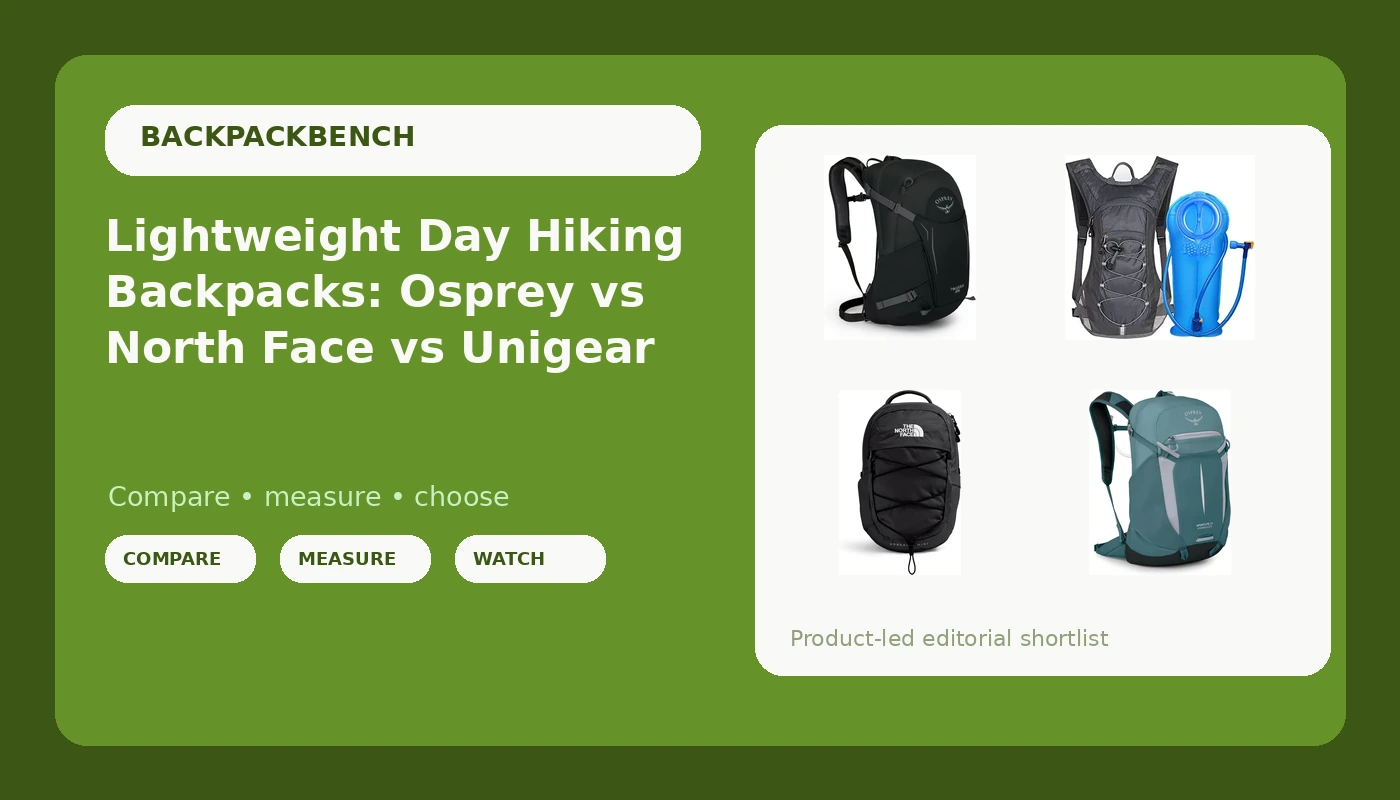
I fit packs for a living, four days a week at an outdoor shop in Seattle, and I have something like 8,000 loaded miles behind me since my 2021 PCT thru-hike. That combination means I answer the same question about lightweight day hiking backpacks on almost every shift, usually from someone standing in front of a wall of forty options with no idea where to start. The four packs in this comparison are the ones that come up most in that conversation, and the differences between them have nothing to do with brand loyalty. They come down to how much of the load sits on your hips and how much migrates to your shoulders by mile eight.
Related: How to Measure Your Torso Length Before You Buy a Pack
The best of these lightweight day hiking backpacks for most people is the Osprey Hikelite 26L, because it is the one here built to carry a full day of layers and food with real structure instead of being a stuff sack with straps. That is the short answer. The longer answer depends on how you pack. The Sportlite wins if you travel thin and fast, the Unigear solves water in a single purchase, and the Borealis Mini is the one that still looks normal in a coffee shop. Read the table first, then the sections that explain the trade-offs.
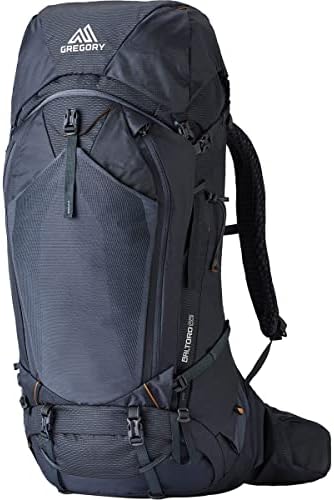
Osprey Hikelite 26L Unisex Hiking Backpack
The 26-liter size swallows a full day of layers, food, and water, and it is the only pack here built around a load-carrying frame and hip belt
The heaviest and the most expensive of the four, and more pack than you need for a two-hour walk
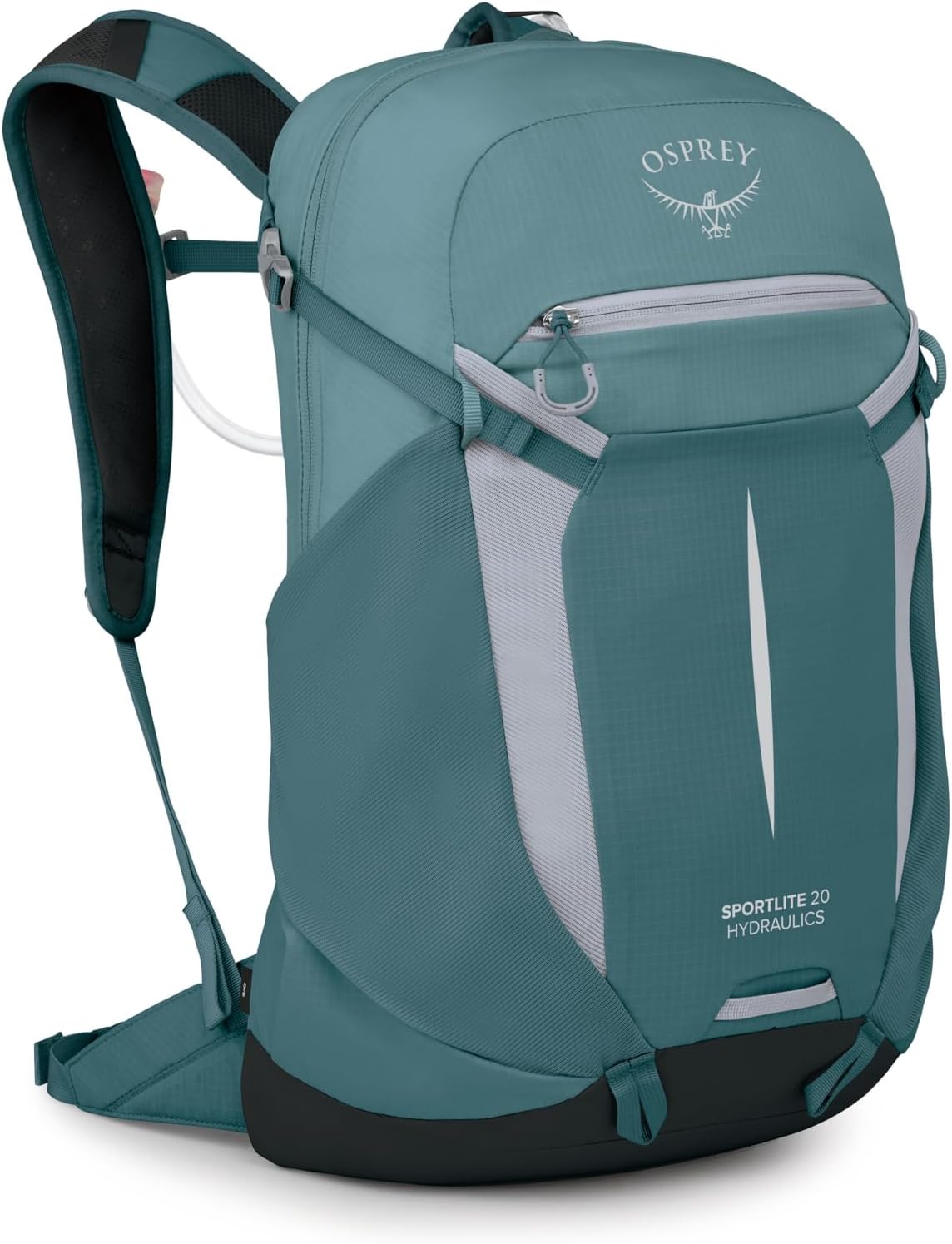
Osprey Sportlite 20L Lightweight Hiking Backpack
The stripped-down Osprey: less material, fewer seams, and a profile that stays out of the way on fast miles
20 liters fills up quickly once you add a shell and a lunch, and the simpler suspension has less to give on a heavy load
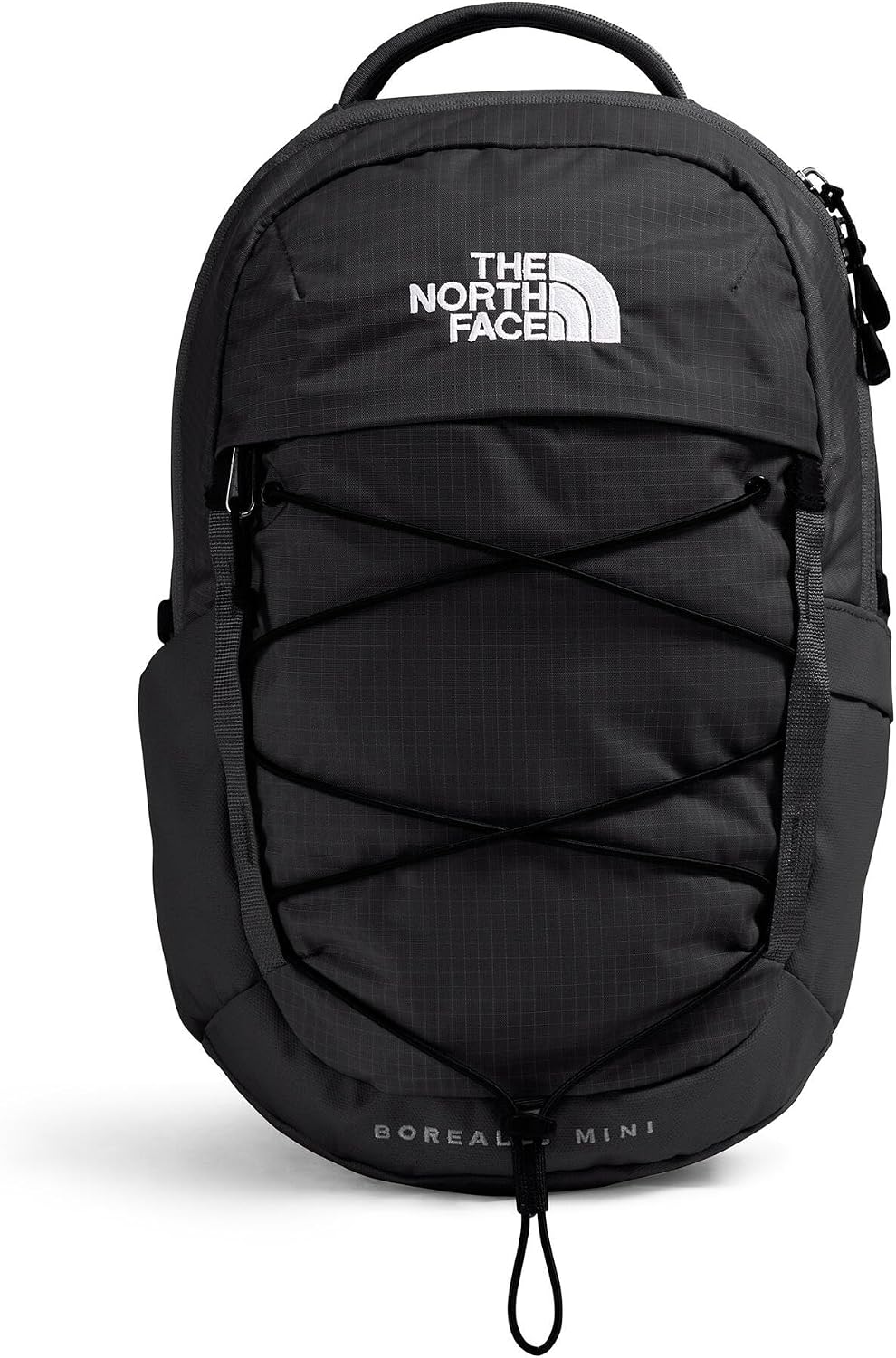
The North Face Borealis Mini Backpack
The crossover pick: it reads as a commute and campus bag, so it works on a short trail and in town without looking like expedition kit
Mini means mini. Capacity is the constraint, and the carry system is aimed at light everyday loads rather than a full day of gear
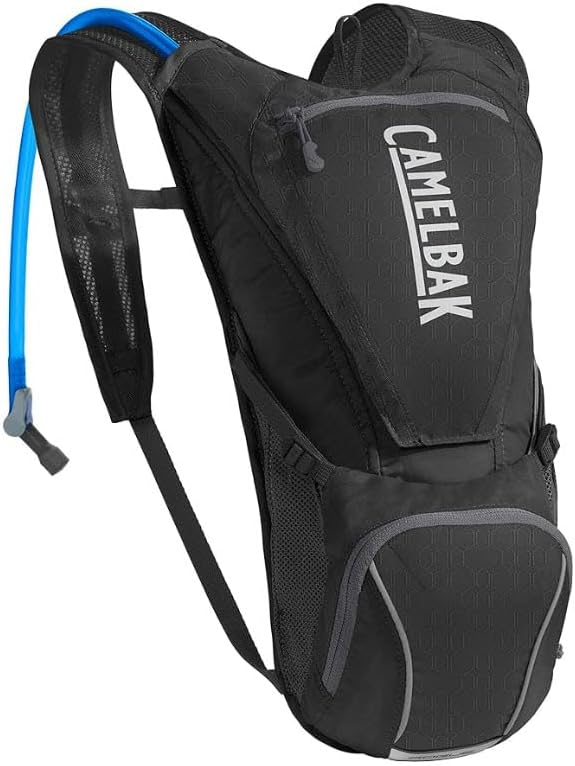
Unigear Hydration Pack Backpack with 2L Water Bladder
The only pack here that arrives with a 2L bladder included, so the hydration question is answered at checkout
Hydration-first designs organize around the reservoir, and load transfer takes a back seat to drinking on the move
Prices and availability were captured from Amazon Creators API and may change.
What I check before I recommend any pack
Spec sheets list twenty-five features and no torso range, which is backwards. Here is the order I work in when a pack comes off the wall and onto the fitting bench.
Torso length comes first. The measurement runs from the bump at the base of your neck down to the top of your hip bones. Get that number wrong and no amount of padding, ventilation mesh, or clever pocketing will save the carry. A pack sized to the wrong torso either rides on your shoulders or sags onto your lower back, and neither one improves with mileage.
Hip belt transfer comes second. On a daypack this is where most brands quietly give up. A proper hip belt wraps the top of your pelvis and takes weight off your shoulders. A webbing strap with a buckle does not. If a pack's belt is thin, unstructured, or positioned so it slides up onto your waist when you walk, that pack is a shoulder bag with extra steps.
Pocket reach comes third. Can you get a hand into the side pocket while the pack is on and the belt is snug? Can you reach a snack without taking the pack off? A pocket you have to stop and unload the pack to use is worse than no pocket at all, because you paid for it and you will resent it at mile six.
Then I look at honest capacity. A 20-liter pack that fits a shell, a liter of water, and a sandwich is a 20-liter pack. A 20-liter pack with a bulging front pocket and a lid that will not close is a 15-liter pack with marketing.
And finally, the rain cover. If the cover fits the empty pack but not the pack with a full load in it, it will not be on the pack when the weather turns. That is a design failure, not a user error.
The 26-liter all-day pick: Osprey Hikelite 26L
If you are carrying for more than a couple of hours, or carrying anything for anyone else, this is the one that behaves like a real pack. Osprey's reputation in my house is earned on the bigger backpacking lines, where the suspension genuinely moves load onto your hips, and the Hikelite is the daypack expression of that thinking: a frame, a belt that does something, and a body long enough that a shell, a first aid kit, and lunch do not fight each other for space.
The 26-liter volume is the sweet spot for a Pacific Northwest day. You can carry a rain shell, a puffy, water, food, and a small camera without strapping anything to the outside. On a summer hike with a light load you will barely notice it, which is exactly what you want from a pack in this class.
What you give up is weight and money. It is the heaviest and priciest pack in this comparison, and if your version of hiking is a two-mile loop with a water bottle, you are paying for structure you will never use. That is a legitimate reason to pick something else. It is not a reason to call this pack overbuilt.
The 20-liter fast-and-light pick: Osprey Sportlite 20L
The Sportlite is the same brand solving the opposite problem. Fewer panels, fewer seams, less material, and a shape that hugs your back and stays quiet when you are moving quickly. For fast day hikes, trail runs with a walking section, or travel where the pack doubles as a summit bag, this is the more enjoyable carry.
The catch is capacity, and it is a real one. Twenty liters disappears fast in shoulder-season weather. Add a shell, a warm layer, a liter and a half of water, and lunch, and you are at the limit before you have added a camera or a set of microspikes. The minimal back panel also means the pack has less to offer when the load gets heavy. Keep it under about fifteen pounds of total weight and it is delightful. Push past that and you will feel every ounce on your shoulders, because there is less structure there to hand it to your hips.
The hydration-first pick: Unigear Hydration Pack with 2L Water Bladder
This is the pack for the person whose actual problem is drinking enough water. It arrives with a 2L bladder included, which removes a purchase decision and a compatibility headache in one move. For cycling, long trail runs, and hot-weather day hikes where you want to sip without stopping, a reservoir-first design is simply more convenient than a bottle-first one.
The trade-off is organizational. When the reservoir is the center of the design, the rest of the storage wraps around it, and the pockets tend to be sized for the bladder, a phone, and a snack rather than for a full day of layers. Load transfer is also not the point of this class of pack. It will carry comfortably on a light, active day. It is not the pack you choose when you need a hip belt doing 80 percent of the work on a heavier load.
If you already own a reservoir you like, that advantage shrinks. If you do not, this is the least complicated way to get into a hands-free hydration setup.
The crossover pick: The North Face Borealis Mini
The Borealis Mini is the pack in this group that does not look like hiking gear, and for a lot of people that is the entire point. It works as a commute bag, a day bag in a city, and a short-trail pack, and it will not make you feel like you are over-equipped walking into a cafe. For travel, that versatility is worth more than a few liters of capacity.
The honest limitation is in the name. Mini means the volume is limited, and the carry system is built for light, everyday loads rather than for a day of layers, food, and water. If your hikes are short and your gear list is small, this is a comfortable, good-looking answer. If you routinely carry for two people, or you hike in weather that requires real layers, you will run out of pack before you run out of trail.
The trade-offs nobody puts on the box
Daypack hip belts are usually the weak point. Most packs in this size class treat the belt as a stabilizer rather than a load carrier, which is fine at ten pounds and miserable at twenty. If the belt rides up onto your waist when you walk, the pack is telling you something.
Pockets are where cheap packs hide. A hip belt pocket that cannot hold a phone, a side pocket that requires double-jointed shoulders, a lid pocket that only closes when the pack is half empty. These are the daily annoyances that decide whether you reach for a pack or leave it in the closet.
Capacity ratings are aspirational. Treat every listed volume as roughly 10 to 15 percent optimistic once you add a full reservoir and a shell.
Torso range is the spec nobody prints. Brands that publish a torso range are telling you they thought about fit. Brands that publish only a volume are telling you they thought about the shelf.
How to test a pack without a trail
Measure your torso before you buy anything. Then, at home, load the pack with exactly what you plan to carry, not a guess. Wear it for twenty minutes around the house with the hip belt snug and the shoulder straps loosened slightly, and pay attention to where the weight sits. If it is on your shoulders, the belt is not doing its job. If it is on your hips, you have a pack worth keeping.
Buy from somewhere with a real return policy, because the pack that fits beats the pack that wins reviews, including this one.
What I am testing next
I am currently working through women's-specific packs for hip belt fit: four units, ten loaded miles each, with a pressure-point check at mile eight. Early pattern, and it holds with everything above: the packs that fit best are rarely the ones with the longest feature list. I will also have notes soon on how these four handle a genuinely wet Pacific Northwest day, because a rain cover that fits an empty pack is a marketing claim, not a piece of gear.
If you want to check listings for any of the four, the table above links each one. Check current Amazon price before you commit, and remember that the return window is your real fitting room.