Related: How to Measure Your Torso Length Before You Buy a Pack
I have carried a backpack roughly 8,000 miles in the last five years, and the lesson that keeps repeating is simple: hiking backpack fit beats every feature on the spec sheet. A pack that matches your torso length and puts the load on your hips will out-carry a fancier pack that does not, every single time. Torso length first. Hip belt second. Pockets, straps, and colorways after that.
The four packs here cover the range most people actually shop. Two are 15 liter daypacks, one from Osprey and one from BECOJADDE, and two are internal frame haulers from Teton at 55 and 65 liters. They are not competitors. They are four answers to four different questions, and the fastest way to waste money is to buy the answer to somebody else's question.
So this is not a ranking. It is a breakdown of what each pack is for, who it fits, and what I would check before spending money on it.
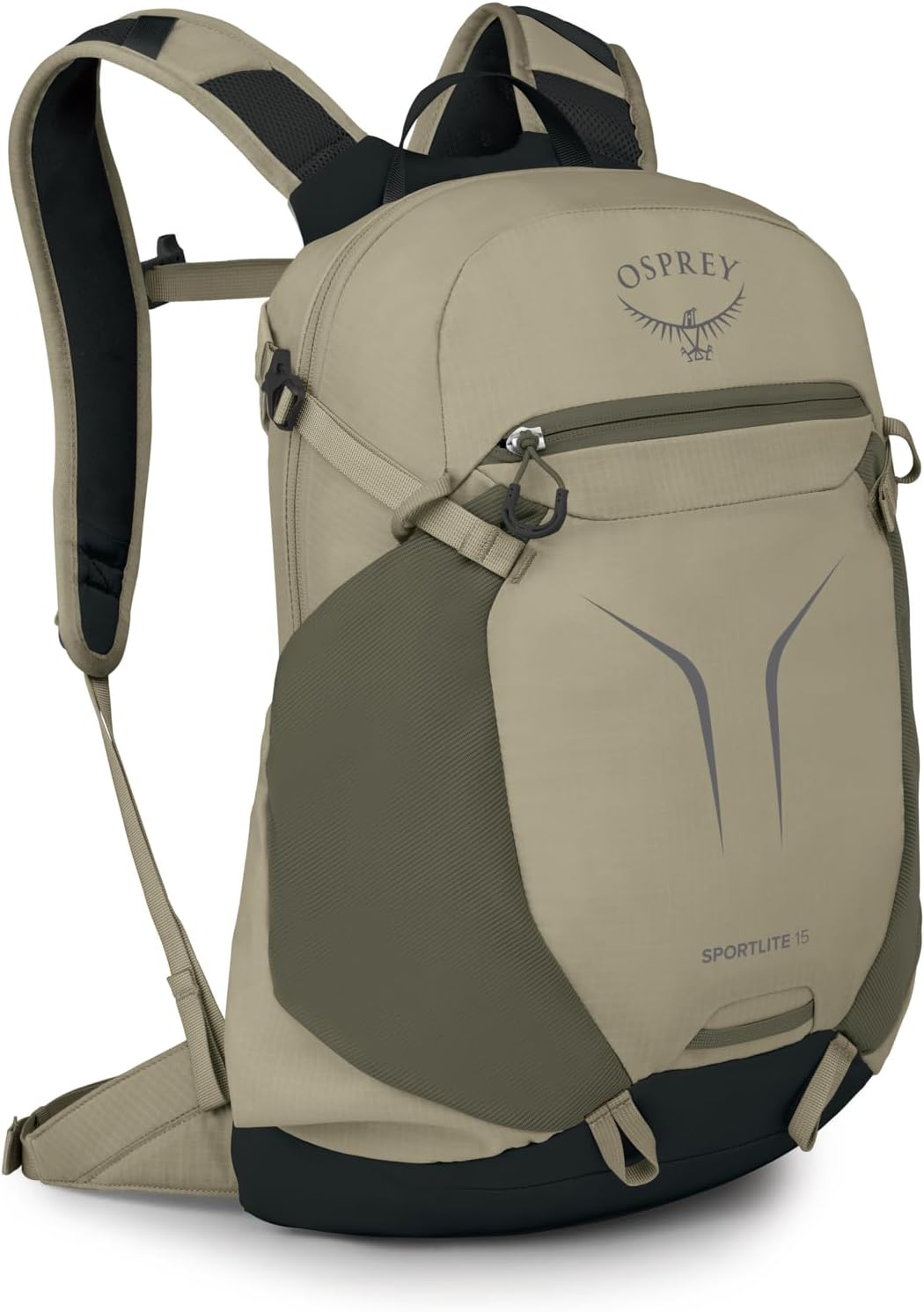
Best Overall Daypack: Osprey Sportlite 15L
Osprey is the best all-round pack brand I can recommend without a caveat, and on a 15 liter pack that matters more than it sounds. At this size you are basically buying a shoulder harness, a back panel, and a warranty. Osprey wins on all three. I have watched their customer service replace packs that were years old and thoroughly abused, and I have never heard that story end badly.
The Sportlite 15L is the light end of that lineup: a stripped-down daypack for fast hikes with a bottle and a shell, and for travel days when you want one small bag on your back. It is listed here in tan, in a single size. A pack this small has no real load transfer, which is fine, because a 15 liter load should not need any.
What it is good at is staying out of the way. What it is not built for is a laptop, a camera body, and a tripod in the same bag. If your day hike involves more than a light load, you want a bigger pack with a real hip belt, not a stuffed daypack.
Two things I would check before buying any 15 liter pack, this one included. First, put weight in it and see where the shoulder straps land. If they press on your neck or slide toward your ears, the pack is wrong for your torso and no brand name fixes that. Second, look at how it sits empty versus loaded. A daypack that sags away from your back when full will bounce on every downhill.
 Visit on Amazon → | Visit on Amazon →
Best Budget Daypack: BECOJADDE 15L
The BECOJADDE 15L is the pack I would hand to someone who needs a second bag, not a primary one. It is foldable and packable, ultralight in the way thin fabric and minimal hardware are ultralight, and it costs about what lunch out costs. In beige it reads as a travel bag rather than technical gear, which is either a feature or a bug depending on your trip.
Where it earns its place: inside a 55 or 65 liter pack as a summit bag or a town bag, on a travel day when you want one small bag for hours of walking, or in the car for a spontaneous trail. It also solves the two-pack problem for families, because a packable daypack can be handed to a kid without anyone worrying about it.
Where it does not: heavy loads, sharp objects, and long days in serious weather. Thin fabric is thin fabric. Keep the load to water, a layer, snacks, and a phone and it does the job it was built for. Ask it to carry a full day of camera gear and you will be miserable by mile three. For a bag that lives inside another bag, that is a fair trade.
 Visit on Amazon → | Visit on Amazon →
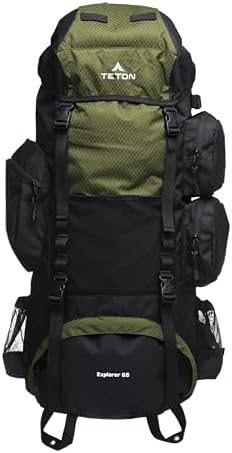
Best Weekend Pack: Teton 55L Scout
The Teton 55L Scout is the pack I point first-time backpackers toward when they are building a kit on a real budget. Two details in the listing matter more than the volume number: it is an internal frame pack, and it includes a rain cover.
The frame is what makes a 55 liter load possible. Without one, weight collapses onto your shoulders and the hip belt becomes decoration. With one, the pack can move load to your hips, which is where it belongs. The included rain cover is the detail most first packs skip, and it is the one you miss most on a wet weekend in the Cascades.
What to check: the torso range. If a listing does not tell you what torso lengths the pack fits, that is information in itself. Torso length is the measurement everyone ignores and the one that matters most, from the bony bump at the base of your neck to the top of your hip bones. Get it wrong and you will fight the pack all day. Also check the rain cover against a full pack, not an empty one. A cover that fits a flat pack will not fit a pack holding a sleeping bag and three days of food.
Budget packs trade refinement and a little weight for price. They do not change whether the load reaches your hips, as long as the fit is right.
 Visit on Amazon → | Visit on Amazon →
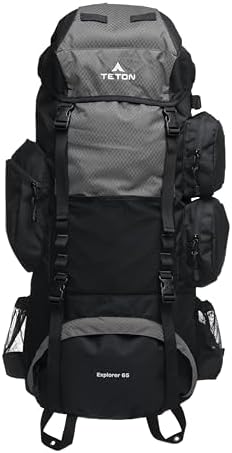
Best Big Load: Teton 65L Explorer
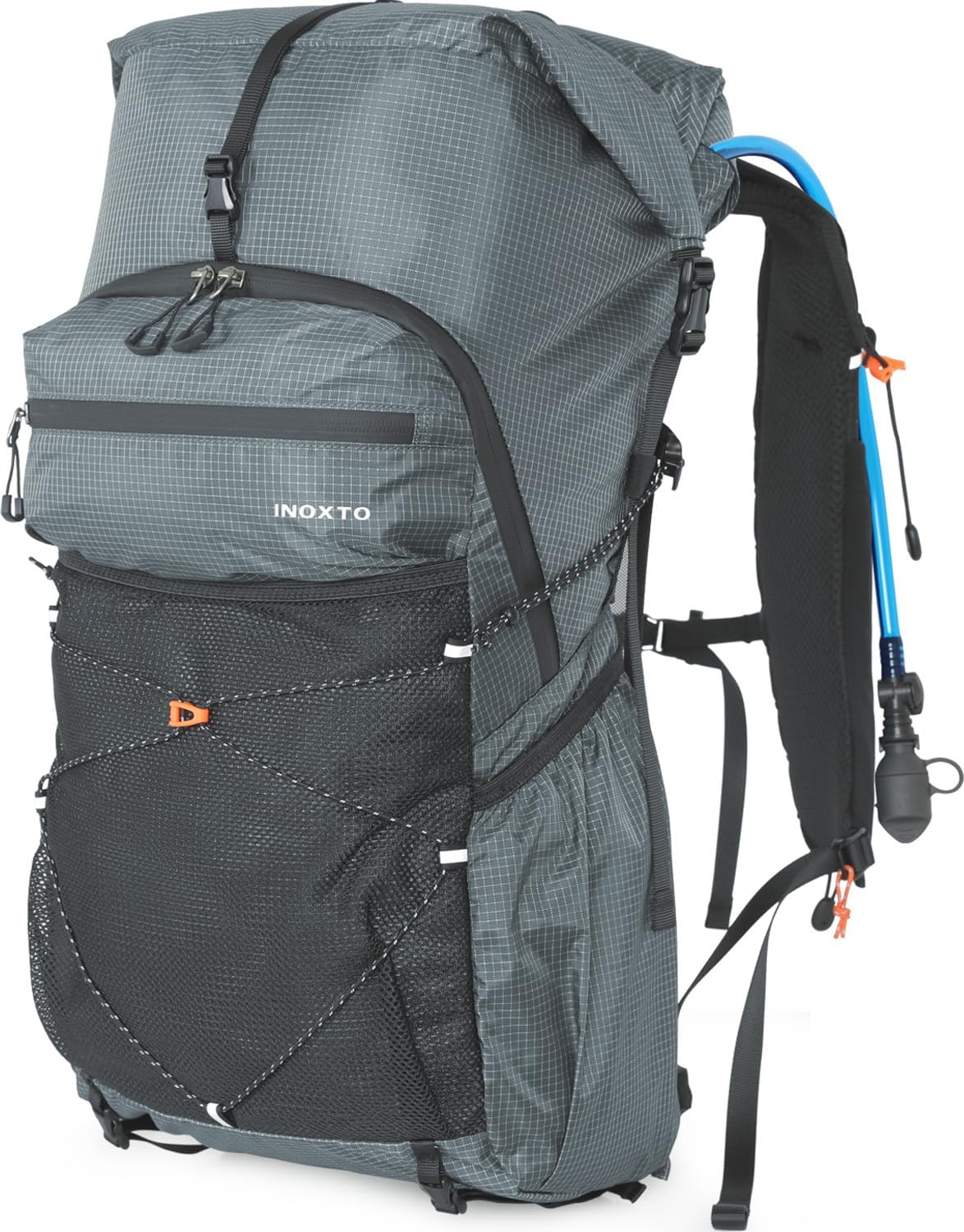
The Teton 65L Explorer is the same idea with ten more liters, a graphite colorway, and a rain cover in the box. Ten liters does not sound like much until you are deciding whether to strap a sleeping pad to the outside of your pack in the rain. At 65 liters you stop making that decision. A bulky synthetic bag, winter layers, or a share of a partner's gear all fit inside, which is where gear belongs.
This is the size for three nights and longer, for cold-weather trips, and for anyone whose kit is not ultralight yet and probably will not be this season. That is a real group, and most of us have been in it.
Same rules apply, only more so. The bigger the load, the more the hip belt and frame have to do. If a pack sags in the middle when you set it down loaded, that weight is going to your shoulders by mile five. Fit matters more at 65 liters than at 15, because the loads are heavier and a bad fit lasts all day.
If you are choosing between this and the Scout, be honest about your gear. Buy the pack that fits your actual kit and your actual torso, not the volume you wish you needed.
 Visit on Amazon → | Visit on Amazon →
How I judge a hiking backpack
Every pack I recommend has to survive the same three checks, and I do not hand out verdicts without them.
A loaded ten-mile hike. Not a lap around the block with a water bottle. Ten miles, with the weight you would actually carry, on terrain with some climb in it. Packs that feel fine in a store feel very different at mile eight.
The hip belt transfer check. I load the pack, tighten the hip belt, then loosen the shoulder straps. If the pack stays put and the weight stays on my hips, the suspension is doing its job. If it slides down my back, the hip belt is decoration.
A thirty-day daily carry trial. A month of commuting, errands, and short hikes tells you which pockets you actually use and which ones were designed by someone who has never worn the pack. A useless pocket is worse than no pocket, because you keep checking it.
I also weigh everything I own, which is a habit that has cost me friends. Tag weight and real weight are different numbers, and the only one that matters is how the pack feels at mile eight with your load in it.
What the spec sheet leaves out
Spec sheets list twenty-five features and forget the torso range. That is the single most useful piece of information about a pack, and it is usually the hardest to find.
Torso length comes first. Everything else, volume, pockets, frame design, follows. A pack sized for a 19 inch torso on a 16 inch torso will ride low, put weight on your shoulders, and never feel right, no matter how many straps you tighten.
The hip belt does about 80% of the work. On the two Teton packs, the internal frame exists to move load into that belt. On the two 15 liter daypacks there is no load to move, which is why they can get away with simple harnesses and webbing belts.
Brand matters, but less than fit. Osprey is my default recommendation for most people, because the suspension genuinely transfers load and the warranty is legendary. Gregory's hip belts are the best in the business if you have hips. Deuter's Aircontact handles heavy loads better than anything else I have carried. Hyperlite is brilliant under a 15 pound base weight and punishing above it. REI's Traverse line gets you most of the way to an Osprey for a lot less money.
None of that helps if the torso length is wrong. Fit first, brand second.
The hiking backpack reference table
This is the table I keep in my notes when someone asks which pack to buy. Volume is the least important column. Fit and use case are the top two. Prices move constantly, so check the listing.
| Pack | Volume | Frame | Best for | Price |
|---|---|---|---|---|
| Visit on Amazon → Osprey Sportlite 15L, Tan |
15L | Daypack | Fast day hikes, travel | $80.00 |
| Visit on Amazon → BECOJADDE 15L, Beige |
15L | Packable daypack | Summit bag, second bag, travel | $23.75 |
| Visit on Amazon → Teton 55L Scout, Olive |
55L | Internal frame, rain cover included | Weekend overnights, first kit | $99.03 |
| Visit on Amazon → Teton 65L Explorer, Graphite |
65L | Internal frame, rain cover included | Multi-day trips, bulky gear | $114.99 |
| Your torso measurement, C7 to iliac crest | n/a | n/a | Do this before you buy | Not a product |
The flip side of that table: the two 15 liter packs are close to interchangeable for most people, so buy on price, color, and brand support. The two Teton packs are not interchangeable. If you are stuck between 55 and 65 liters, lay your gear out in a box of that size before you order.
Should you buy the Osprey Sportlite 15L?
Yes, if you want a daypack that disappears on your back and a brand that will stand behind it years from now. It is a 15 liter pack, so keep expectations at 15 liters: water, a layer, snacks, a phone, a small kit. If that is your day, this is the one I would buy, and the warranty makes the decision easier.
Should you buy the BECOJADDE 15L?
Yes, as a second pack. It folds down small enough to live inside a bigger pack, it costs less than a decent dinner, and it carries a light day load fine. Just do not ask it to be your only pack on a trip with real gear. As a spare, a summit bag, or a travel bag, it does all three well.
Should you buy the Teton 55L Scout?
Yes, if you are building a first backpacking kit and the budget is real. An internal frame and an included rain cover are the two features that make a budget pack usable on an actual overnight, and this one has both. Check the torso range before you order, and try it loaded before your first trip, not on it.
Should you buy the Teton 65L Explorer?
Yes, if your trips run longer than a weekend or your gear is bulky. The extra ten liters over the Scout is the difference between fitting your kit inside the pack and lashing it to the outside in the rain. Same advice applies: torso length first, then volume, then everything else.
Four packs, four jobs, and one rule that covers all of them. Fit beats features. Measure your torso, load the pack, walk it ten miles if you can, and buy the one that puts the weight on your hips. The pack that fits is the pack that comes home with you.