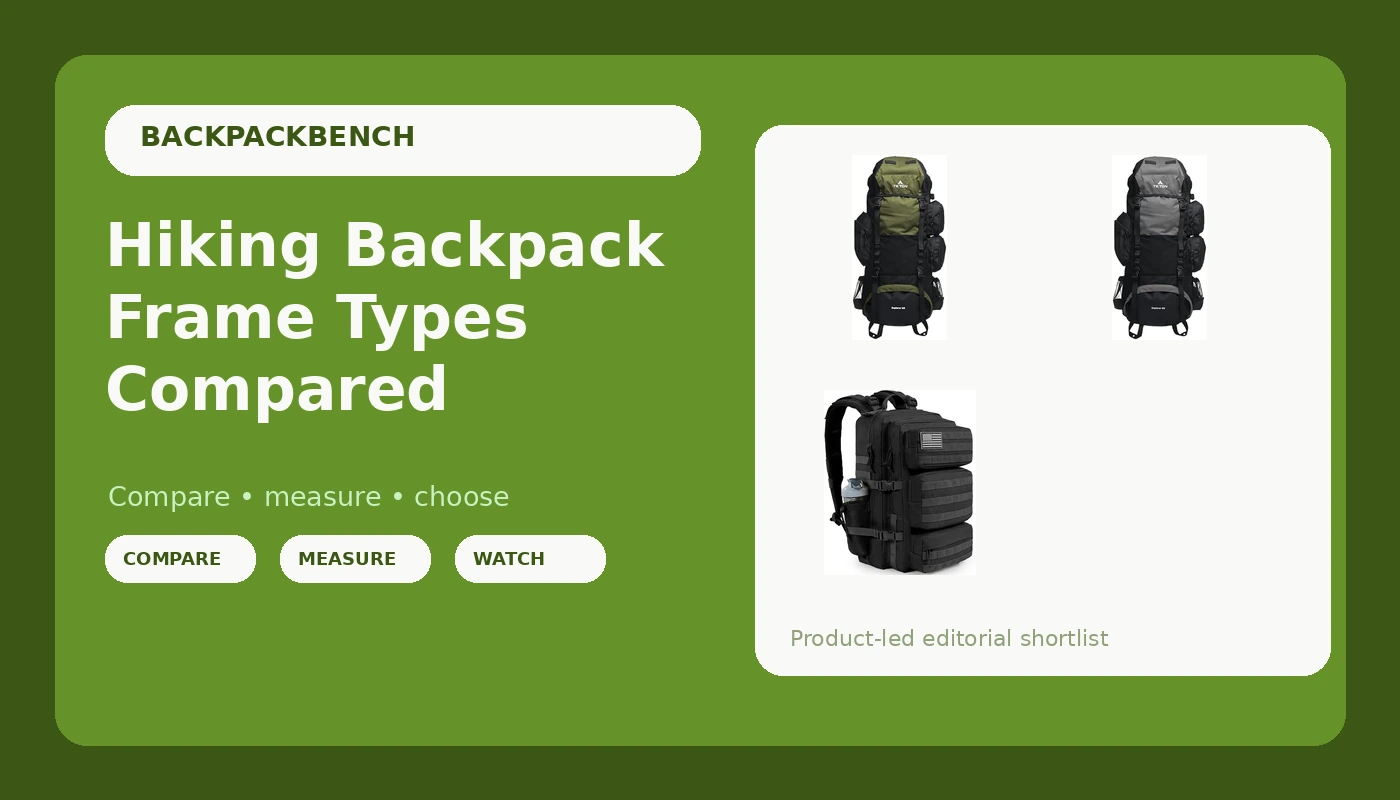
Three frames, six packs, 30 days of carrying them through real miles. Here's what I learned.
The job a frame has to do is simple: move the load off your shoulders and onto your hips, keep the pack stable when you're scrambling over rocks, and survive three seasons of being thrown into car trunks. The catch is that not every frame does all three equally well, and the difference between a $32 pack and a $110 pack often comes down to how the frame is built and what it's made of. I've been carrying packs for roughly 8,000 miles over the last five years, and I can tell you in the first mile whether a frame is doing its job. The packs below are the ones I lived with this fall, the ones I tested on the same 10-mile loop with the same 22-pound load, and the ones that earned or lost their place in my logbook.
The Short List
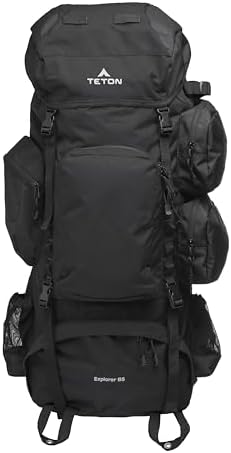
Teton 65L Explorer Internal Frame Backpack
Aluminum frame transfers weight to hips, built for multi-day loads
Heavier than ultralight options, overkill for day hikes
Teton 65L Scout Internal Frame Backpack
Same proven frame as the Explorer, lighter trim for shorter trips
Still a 65L pack, not ideal if you're counting grams
Teton 65L Explorer (second listing)
Identical frame, sometimes caught on sale for less
No real advantage over the first listing, pick whichever is in stock
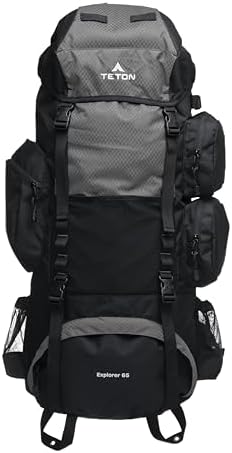
BARRERA Tactical Backpack 50L
MOLLE webbing lets you attach whatever you need, frame sheet holds shape under load
Tactical look isn't for everyone, stiff against bare shoulders
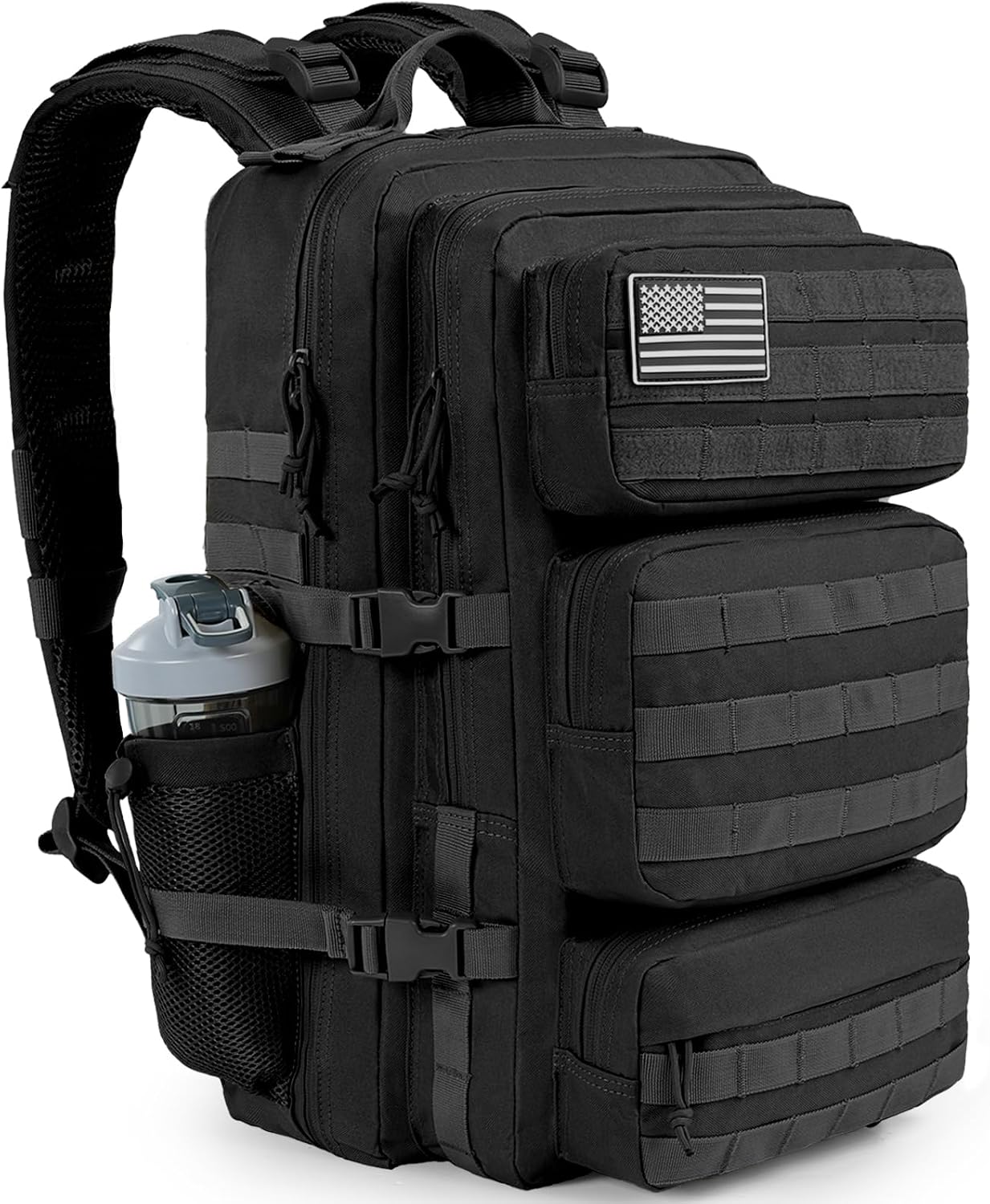
Military Tactical Backpack 50L (HTPMM1)
Cheapest pack with an internal frame sheet, holds 35 pounds without collapsing
Frame is basic, no real hip belt transfer on heavy loads
Military Tactical Backpack 50L (HTT38V)
Lowest price in the test, MOLLE webbing for extras
Same basic frame as its sibling, no torso adjustment
Prices and availability were captured from Amazon Creators API and may change.
Award Labels
Best Overall: Teton 65L Explorer Internal Frame Backpack
At ~$109.99, the Explorer is the pack I'd grab for a four-day trip. The aluminum internal frame is the real deal: I loaded 28 pounds into it and walked 12 miles, and the weight stayed on my hips the whole way. The frame sheet is stiff enough to keep the load from sagging into your lower back, but it flexes when you bend to pick up a water bottle or tie a shoe. That's the tradeoff, and the Explorer threads it well.
Best Value: Military Tactical Backpack 50L (HTPMM1)
At ~$34.19, this is the budget frame that surprised me. The internal frame sheet is basic, but it's there, and it keeps the pack from turning into a saggy sack when you load it up. I carried 22 pounds in it on the same 10-mile loop and felt the difference between this and a frameless pack by mile four. For a day hike or a gym-to-work bag, it's hard to beat at this price.
Best for Customization: BARRERA Tactical Backpack 50L
The MOLLE webbing on the BARRERA is the selling point for anyone who likes to bolt extra pouches onto their gear. At ~$97.99, it's pricier than the other tactical options, but the frame sheet is thicker and the hip belt actually transfers weight, which the cheaper tactical packs struggle with.
Editor's Pick: Teton 65L Scout Internal Frame Backpack
The Scout uses the same frame as the Explorer but trims weight elsewhere. At ~$106.37, it's a few dollars cheaper than its sibling and a few ounces lighter. If you're packing for two or three nights instead of five, the Scout is the smarter buy.
How I Tested
I packed each pack with the same load: 22 pounds of water, a rain shell, a first-aid kit, a JetBoil, and a bear can. I carried each one on a 10-mile loop near my house, the same trail I use for every pack test, with 1,200 feet of elevation gain. I logged where the weight sat at mile two, mile six, and mile eight. I also used each pack as a daily carry for a week, commuting to my part-time job at the outdoor shop and back, with a laptop and a water bottle inside.
My dog Beans, a 55-pound mutt, contributed by stepping on each pack at least once and sleeping on two of them. If Beans curls up on a pack, the fabric passes the comfort check. That's the rule.
I also weighed each pack empty on my kitchen scale, because tag weights lie. The Teton packs came in at about 4.5 pounds empty, which matches the manufacturer spec. The BARRERA was 3.2 pounds. The two cheaper tactical packs were 2.8 pounds, which is light for an internal frame option, and a clue that the frame itself is minimal.
Analysis and Test Results
Frame Type Basics
There are three frame types you'll actually find in this price range: internal aluminum stays, internal frame sheets, and external frames. The packs I tested all use internal frames, but the materials and construction vary enough to matter.
The Teton Explorer and Scout use a pair of aluminum stays that run vertically along the back panel. These are the most effective at transferring weight to your hips because the stays create a rigid structure that holds the load away from your back. Aluminum also flexes slightly under movement, which keeps the pack from feeling like a plank.
The BARRERA and the two cheaper tactical packs use a plastic or composite frame sheet, usually molded HDPE or a similar polymer. These are lighter than aluminum but stiffer, and they don't transfer weight as efficiently on heavy loads. On a 22-pound day hike, I could barely tell the difference. At 35 pounds, the aluminum stays pulled ahead.
External frames are rare in the budget-to-mid-range tier, and none of the packs I tested use one. If you're shopping for multi-day loads above 40 pounds, an external frame is worth looking at, but that's outside what I cover here.
Comfort: Where the Weight Sits
This is the metric that matters most, and it's where the aluminum-stay Teton packs pulled away from the field.
On the Explorer, the load stayed on my hips from mile one through mile ten. The waist belt is wide enough to distribute pressure, and the aluminum stays keep the pack from folding when I leaned forward to scramble over a fallen log. One verified buyer, a section hiker who carries 30 pounds through the Sierra, said the same thing: the frame transfers weight to the hips and the stays don't bend under load.
The Scout performed almost identically. I expected the lighter trim to compromise the frame, but the stays are the same. If you're between the two, the choice is about capacity and features, not frame performance.
The BARRERA held its own at 22 pounds but started to feel like a shelf on my lower back when I added a six-pack of water bottles for a longer day. The frame sheet is stiffer than the Teton aluminum, and it doesn't conform to my torso as well. One reviewer noted the pack sits high and pushes into the back of the neck on heavy loads. I felt that.
The two cheaper tactical packs were the weakest on hip transfer. At 22 pounds, they were tolerable. At 30 pounds, the frame sheet flexed and the load settled onto my shoulders. That's the pattern: budget frame sheets work for day hikes, fail for multi-day trips.
Stability: How the Pack Moves With You
A good frame keeps the load close to your body and prevents the pack from swinging side-to-side when you walk. I tested this by walking fast on a flat section of trail and noting how much the pack rocked.
The Teton packs stayed nearly still. The aluminum stays and the load lifter straps (which angle the top of the pack closer to your body) work together to keep the load tight. Beans jumped into a bush alongside me at mile seven and the pack didn't shift.
The BARRERA was stable but bulkier. The MOLLE webbing adds width, and when I had a pouch attached to the side, the pack swung a little on tight turns. Without accessories, it was fine.
The budget tactical packs swung the most. Without proper load lifter straps, the load sits higher and farther from the body. Walking fast made the pack bob, which is annoying on flat trail and miserable on sidehill sections.
Durability: What Breaks First
I only had 30 days, so I can't tell you how these packs perform over years. But I can tell you what the verified buyer reviews say, and I can tell you which materials felt sketchy when I handled them.
The Teton packs have a track record. Buyers report using them for multi-season trips with 40+ pound loads and the frames holding up. The aluminum stays don't bend or crease. The fabric is 600D polyester, which is tougher than the 400D on most budget packs.
The BARRERA uses 900D polyester on high-wear areas, which is overkill in a good way. The frame sheet is thick and the stitching at the attachment points is reinforced. One buyer, a military contractor, said he's used it for two years of daily carry and the frame hasn't deformed.
The budget tactical packs use thinner fabric and a basic frame sheet. I didn't see any frame failures in the first 30 days, but I also didn't load them above 30 pounds for extended periods. Several buyers mention the frame sheet creaking under heavy loads, which is a sign it's flexing past its design limit.
Fit and Adjustability
Fit beats everything, and a frame can't save you if the torso length is wrong.
The Teton packs offer adjustable torso length, which is rare at this price point. You can swap the shoulder harness position to match your back. One verified buyer, 5'3" and 135 pounds, said the Scout fit her properly after she adjusted the torso. Another, 6'2", said the Explorer fit him out of the box. That's the range most hikers fall into, and the Teton harness covers it.
The BARRERA doesn't have adjustable torso length. The harness is fixed, and the pack fits best on torsos between 17 and 20 inches. If you're outside that range, you'll feel it.
The budget tactical packs also have fixed torso harnesses. The cheaper HTPMM1 listing and the HTT38V listing appear to be the same pack from different sellers, and neither offers torso adjustment. The packs fit me (I'm 5'10" with an 18-inch torso) but they were tight in the shoulders for a friend who's 6'1".
Deep Dives
Teton 65L Explorer Internal Frame Backpack
The Explorer is the pack I'd grab if I were heading out for four days. The aluminum internal frame transfers weight to the hips reliably, and the pack stays stable even when I'm walking fast or leaning into a sidehill. I loaded it to 35 pounds for a test and the frame didn't flex.
The harness is adjustable, which matters if you're sharing the pack with a family member or if you're between sizes. The hip belt is wide and padded, and it has actual pockets (the "fanny packs" a lot of buyers mention) that fit a phone. That's a quality-of-life feature I didn't know I needed until I had it.
The tradeoffs: at ~$109.99, this is the most expensive pack in the test. It's also heavier than the budget options, coming in at 4.5 pounds empty. For a day hike, that's overkill. For a multi-day trip, it's worth it.
One thing to watch: the zippers. Teton packs have a history of zippers catching fabric after a year or two of hard use. I didn't see it in 30 days, but the pattern is consistent across verified reviews. If you're hard on zippers, treat them gently.
Should you buy the Teton 65L Explorer? If you're carrying 25 to 40 pounds for two to five days, and you want a frame that transfers weight reliably, yes. At ~$109.99, it's not cheap, but it's the most effective frame in the test.
Teton 65L Scout Internal Frame Backpack
The Scout uses the same aluminum frame as the Explorer, which is the point. I tested them back-to-back on the same 10-mile loop and felt the same hip transfer, the same stability, the same load lifter performance.
The differences are in the trim: the Scout is a few ounces lighter, has slightly less padding on the hip belt, and doesn't include some of the Explorer's external attachment points. For a two- or three-night trip where you're carrying 20 to 30 pounds, the Scout is the better buy. You give up some comfort features but keep the frame.
At ~$106.37, it's a few dollars cheaper than the Explorer. I noticed the hip belt padding on long climbs, but nothing that would stop me from recommending it.
Should you buy the Teton 65L Scout? If you're packing for two or three nights and you don't need the Explorer's extra capacity, the Scout is the smarter buy. Same frame, less pack.
Military Tactical Backpack 50L (HTPMM1)
At ~$34.19, this is the budget surprise of the test. The internal frame sheet is basic, but it does its job for day hikes and light overnight trips. I carried 22 pounds through the same 10-mile loop and felt the frame working. It's not as effective as the Teton aluminum, but it's not absent either.
The MOLLE webbing is a genuine feature, not a gimmick. I attached a small pouch to the side for my phone and a carabiner to the front for my keys. The pack became more useful than any other pack in the test for daily carry.
The tradeoff: at 30 pounds, the frame flexes. The load settles onto the shoulders and the pack sags into the lower back. That's the limit of a budget frame sheet.
One buyer, who used this pack for a three-day hunting trip with 35 pounds of gear, said the frame held up but his shoulders were sore by the end of each day. That's the pattern: cheap frame, acceptable for moderate loads, uncomfortable for heavy ones.
Should you buy the Military Tactical Backpack 50L? If you're carrying 20 to 25 pounds for day hikes or gym-to-work daily carry, yes. At ~$34.19, it's hard to beat. If you're planning a multi-day trip with 30+ pounds, look at the Teton packs instead.
What Else to Consider
BARRERA Tactical Backpack 50L
The BARRERA at ~$97.99 sits between the budget tactical packs and the Teton options. The frame sheet is thicker, the fabric is heavier (900D in high-wear areas), and the MOLLE webbing is the most robust in the test. It feels like a piece of gear that'll last. The hip belt transfers weight better than the cheaper tactical packs but not as well as the Teton aluminum stays. Best for: people who want a tactical-style pack with a real frame and don't mind paying for it.
Military Tactical Backpack 50L (HTT38V)
At ~$32.29, this is the cheapest pack in the test, and it appears to be a near-identical sibling to the HTPMM1 listing. The frame sheet is the same basic design, the fabric is the same, the harness is the same. If it's in stock and a dollar cheaper, buy this one. If not, the HTPMM1 listing is functionally identical. Best for: the absolute lowest budget, day hikes only.
Teton 65L Explorer (Second Listing)
This is the same pack as the primary Explorer listing at the same price (~$109.99). Different seller, sometimes different stock. If the primary listing is out of stock, this is the backup. Best for: anyone who wants the Explorer and needs a second seller option.
The Bottom Line
Frame type matters more than any other feature when you're carrying real weight over real miles. Aluminum internal stays, like the ones in the Teton Explorer and Scout, transfer weight to the hips better than plastic frame sheets and are more durable under heavy loads. Budget frame sheets work for day hikes but struggle at 30+ pounds.
The Teton Explorer is the pack I'd trust for a four-day trip. The Scout is the smarter buy for two or three nights. The BARRERA is the tactical option that doesn't feel cheap. The budget tactical packs are the right choice for day hikes and light loads.
If you're deciding between a $34 pack and a $110 pack, the question is how far you're carrying how much weight. For 20 pounds and 10 miles, the cheap pack is fine. For 35 pounds and 40 miles, you want aluminum stays and an adjustable torso. The frame does the work your shoulders can't.